Rent an Apartment in Valencia as a Foreigner (2026)
You rent under the Urban Leases Act (LAU, Law 29/1994), amended by Royal Decree-law 29/2026 since 8 October 2026. The landlord cannot charge you agency or formalisation fees, cannot require rent-default insurance, and cannot ask for more than one month's rent in advance. The landlord must lodge your deposit with the Generalitat.
Also in: Deutsch
On this page
- Which rules apply to your lease
- Choose the lease type
- Length, renewals and leaving
- What you pay before you get the keys
- What rent to expect
- Rent, caps and yearly updates
- Costs on top of the rent
- After you sign: the deposit and the padrón
- Repairs and moving out
- When to ask the Generalitat or a lawyer
- Step by step
- Common questions
Which rules apply to your lease
You rent under the Urban Leases Act (LAU, Law 29/1994). Royal Decree-law 29/2026 amended it from 8 October 2026.
The Government sent that decree-law to Congress for validation after the earlier housing decrees were repealed. Congress repealed Royal Decree-laws 26/2026 and 27/2026. A guide that treats either as current is out of date.
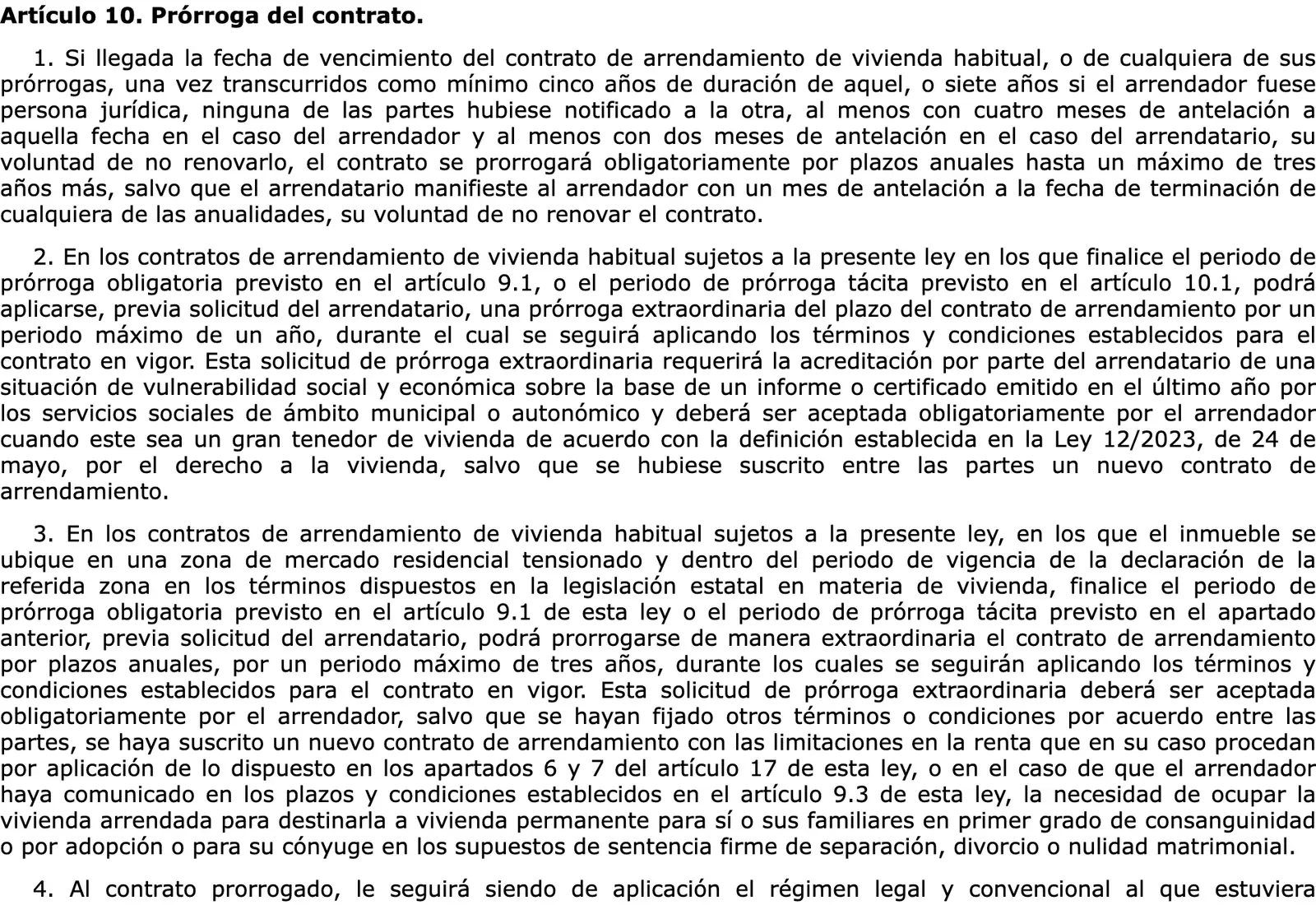
Article 10 of the LAU, on renewals after the first five years (seven if the landlord is a company), changes on 15 November 2026. Your signing date decides which text reaches you.
| Your lease | Article 10 that applies |
|---|---|
| Signed on or after 15 November 2026 | The new text from day one |
| Signed earlier, first term ends after 15 November 2026 | The new text at that expiry |
| Already in annual extensions on 15 November 2026 | The current text until that period ends, then the new text |
Choose the lease type
The reason for your stay decides the lease type. A habitual-residence lease is the default. A temporary-housing lease needs a stated cause.
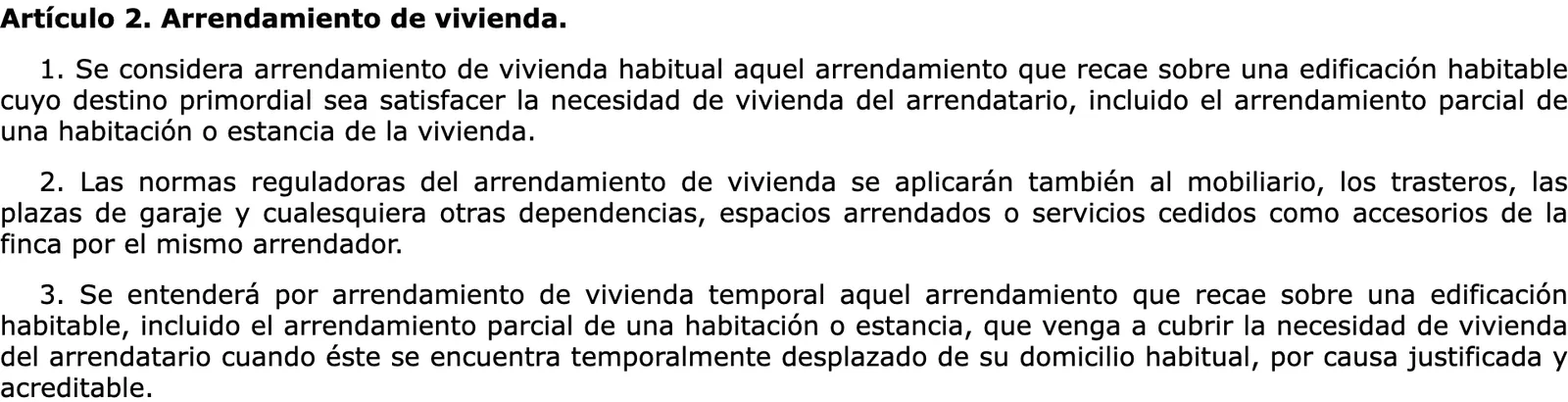
Habitual-residence lease
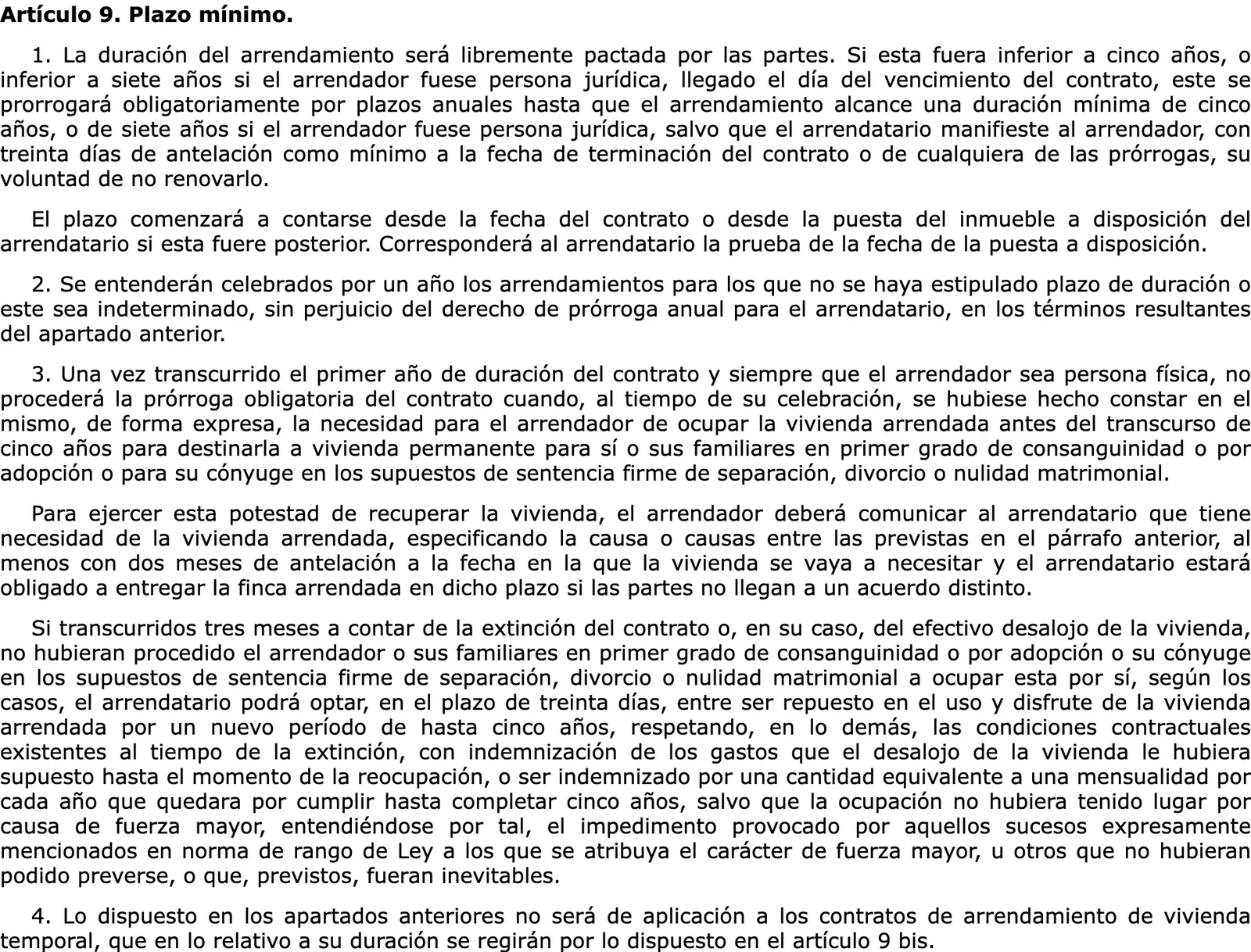
The parties agree the duration freely. If it is shorter than five years, or seven if the landlord is a company, it extends in annual terms until it reaches that length.
A lease with no stated or an indeterminate term counts as one year, and you keep the annual extension right. You can require the lease in writing.
Temporary-housing lease
Since 8 October 2026 the LAU defines a temporary-housing lease (vivienda temporal). It suits a tenant temporarily away from their usual home for a justified cause that can be proven. It can cover a single room.
It must run more than thirty-one days and, as a rule, no more than twelve months. The contract must state the reason for your stay.
Without a stated reason, it counts as a habitual-residence lease from signing. The same applies after more than twelve months without justification, or after more than two consecutive temporary leases on the same home between the same parties.
A seasonal or temporary lease signed before 8 October 2026 keeps its old status as a non-housing lease until the contract end date. It then ends with no extension. Plan your next home before that date.
Room rental
The rents of room contracts running at the same time on one home cannot add up to more than the rent of letting the whole home.
Length, renewals and leaving
This section covers leaving early and what happens when the term ends.
Your exit rights
After six months you can leave by giving the landlord at least thirty days’ notice, and the landlord gets no compensation. In a temporary lease you can leave after one month with ten days’ notice.
To stop the compulsory extension, tell the landlord at least thirty days before the contract or an extension ends.
Renewals after the first term
Under the current text, if neither side gives notice, the lease extends by annual terms for up to three more years. The landlord’s notice is four months and the tenant’s is two. During that period you can leave with one month’s notice before any annual term ends.
From 15 November 2026 the lease instead renews for successive five-year terms, or seven if the landlord is a company. The landlord’s notice becomes six months, and yours stays at two.
Under the new text, a landlord who validly refuses to renew owes you compensation. It is the greater of twelve monthly amounts or one per year you lived there, valued at the top of your home’s range in the state rental price index. Exceptions apply, so ask a lawyer before you rely on that sum.
When a landlord needs the home back
An individual landlord can end the lease after the first year only if the contract said at signing that the landlord might need the home within five years. The landlord must then give two months’ notice stating the cause.
If neither the landlord nor close family move in within three months, you choose within thirty days between returning for up to five more years or compensation.
Extraordinary extension
Royal Decree-law 29/2026 provides an extraordinary extension of up to two more years, on the tenant’s request. It covers leases in force on its entry into force whose compulsory extension ends before 31 December 2028. You must be up to date with rent and have paid monthly for the previous eight months.
What you pay before you get the keys
Before you hand over any money, know these five limits.
| Item | Limit |
|---|---|
| Rent in advance | One month at most |
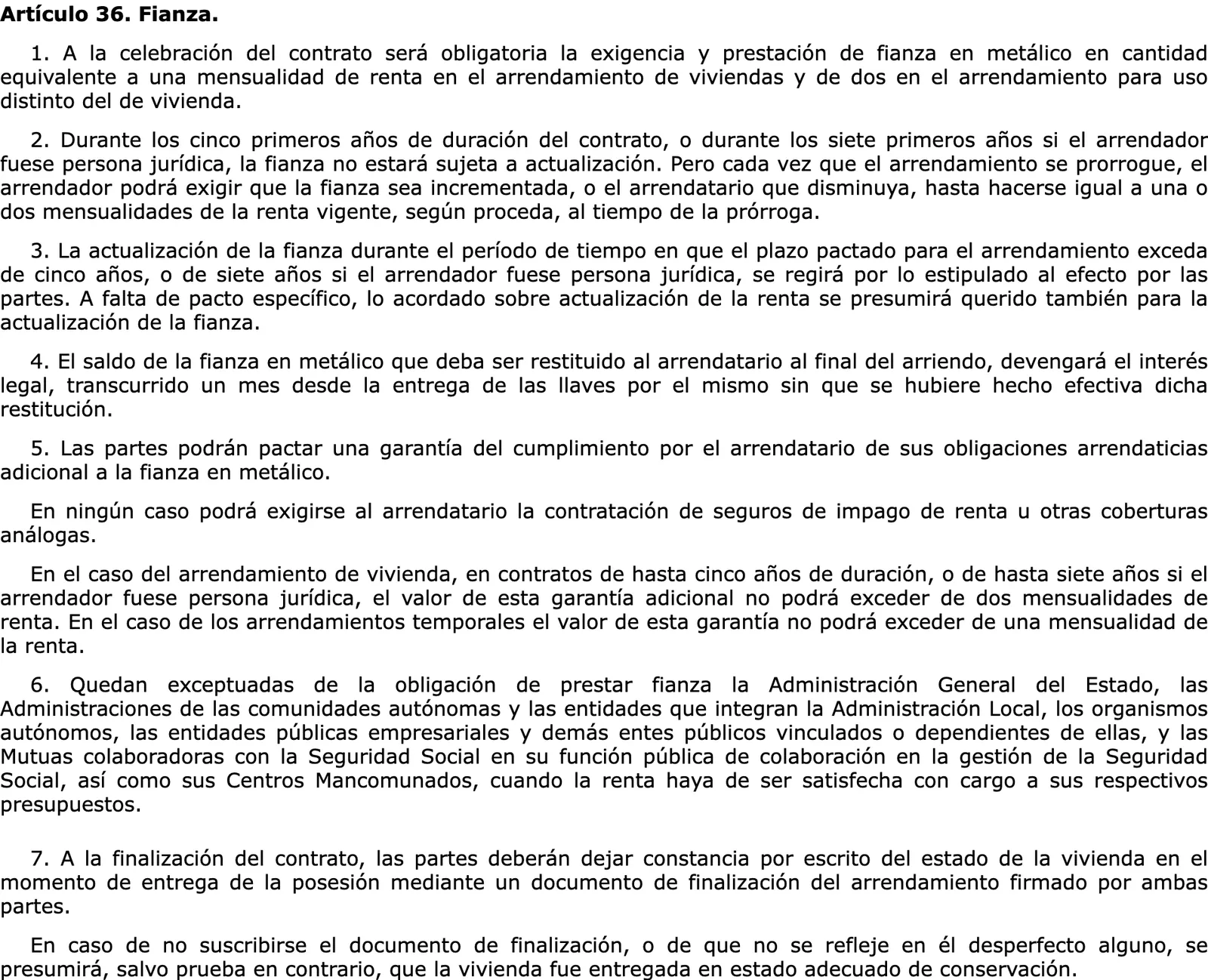
| Fianza (cash deposit) | One month of rent for housing |
| Extra guarantee | Two months at most on a housing lease of up to five years, seven if the landlord is a company |
| Extra guarantee, temporary lease | One month at most |
| Rent-default insurance | Cannot be required |
The landlord cannot charge you agency or formalisation fees.
Los gastos de gestión inmobiliaria y de formalización del contrato no podrán ser repercutidos al arrendatario, ni directa ni indirectamente, bajo ningún concepto o denominación.
Real-estate management and contract formalisation costs may not be passed on to the tenant, directly or indirectly, under any name.
BOE · LAU, art. 20.2
That ban covers any service to prepare, formalise, manage, amend or renew the lease. A non-essential service is billable to you only if you asked for it in writing after hearing it is optional and its price.
The extra guarantee is a separate arrangement from the fianza.
En ningún caso podrá exigirse al arrendatario la contratación de seguros de impago de renta u otras coberturas análogas.
In no case may the tenant be required to take out rent-default insurance or similar cover.
BOE · LAU, art. 36.5
What rent to expect
District medians run from €516 a month in Pobles del Nord to €850 in El Pla del Real. L’Eixample, the district that includes Russafa, sits at about €824.
Those figures are the Ministry of Housing’s SERPAVI index for 2024: rents declared in tax returns for collective housing (flats in multi-home buildings) let as a main residence. Compare them with current listings before you budget. The neighbourhoods guide has the full table by district.
Rent, caps and yearly updates
The rent is whatever you and the landlord agree. Pay it by electronic means. Unless the contract differs, it falls due in the first seven days of each month. Tip: ask for a receipt, because the landlord must give you one.
Rent caps
València is not on any quarterly BOE list of declared tensioned zones, up to the list for the second quarter of 2026. Check the newest resolution before you sign.
Yearly updates
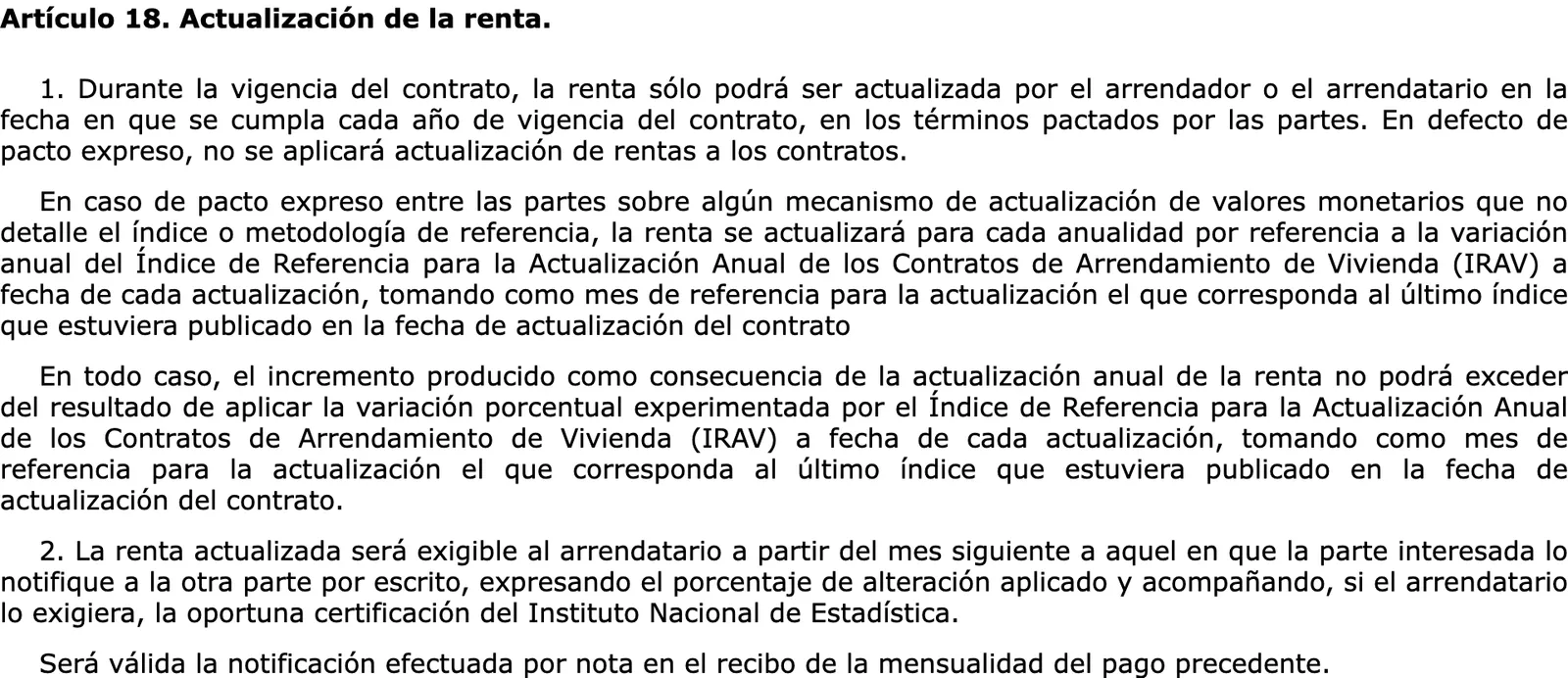
Without an update clause, the rent does not change. An update cannot exceed the IRAV change. The new rent is due from the month after written notice stating the percentage.
For updates falling before 31 December 2027, a rise without a new agreement cannot exceed two per cent. The IRAV annual variation for August 2026 is 2.47%.
Costs on top of the rent
Metered utilities such as water and electricity are always the tenant’s cost. The utilities guide covers the contracts.
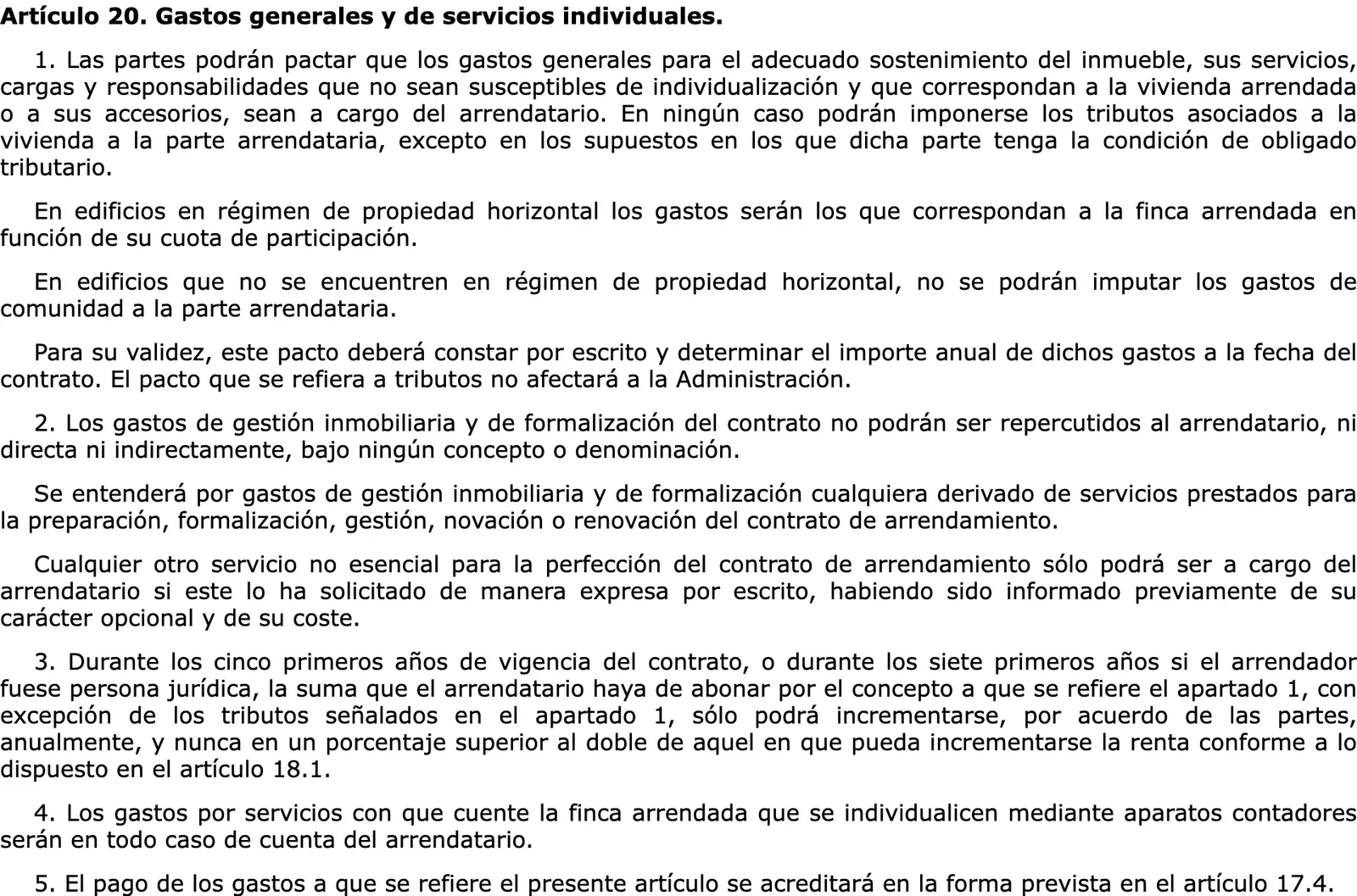
Community costs can be charged to you only through a written clause that states the annual amount at signing. In the first five years (seven if the landlord is a company) they can rise only by agreement, and never by more than double the rent-update percentage.
Taxes tied to the home cannot be imposed on you unless you are the legal taxpayer. Habitual-residence leases are exempt from the transfer tax (Impuesto sobre Transmisiones Patrimoniales).
After you sign: the deposit and the padrón
Two checks follow the signature; do both in the first month.

Check the deposit
The landlord, not you, must lodge the fianza with the Generalitat, and it stays there until the lease ends. The deadline is one month after signing.
To check, email fianarren@gva.es with a copy of your ID and the lease. The fianza guide covers surcharges and complaints.
Register on the padrón
Everyone who lives in Spain must register on the padrón of the municipality where they live. The Ajuntament de València handles it free of charge.
For a rented home the lease must be in force, signed by everyone named in it and run for more than six months. Add the latest rent receipt or bank transfer from the last two months. Bring originals for an in-person visit.
Book a cita previa or phone 010. The Oficina del Padrón Municipal is on Plaça de l’Ajuntament, with its entrance at Periodista Azzati 2.
Placa de l'Ajuntament 1 (padron office entrance: C/ Periodista Azzati 2), 46002 Valencia, Spain · Open in Google Maps (opens in a new tab)
Repairs and moving out
Something broke? The landlord must make the repairs that keep the home habitable, without raising the rent. Small repairs from ordinary wear are yours.
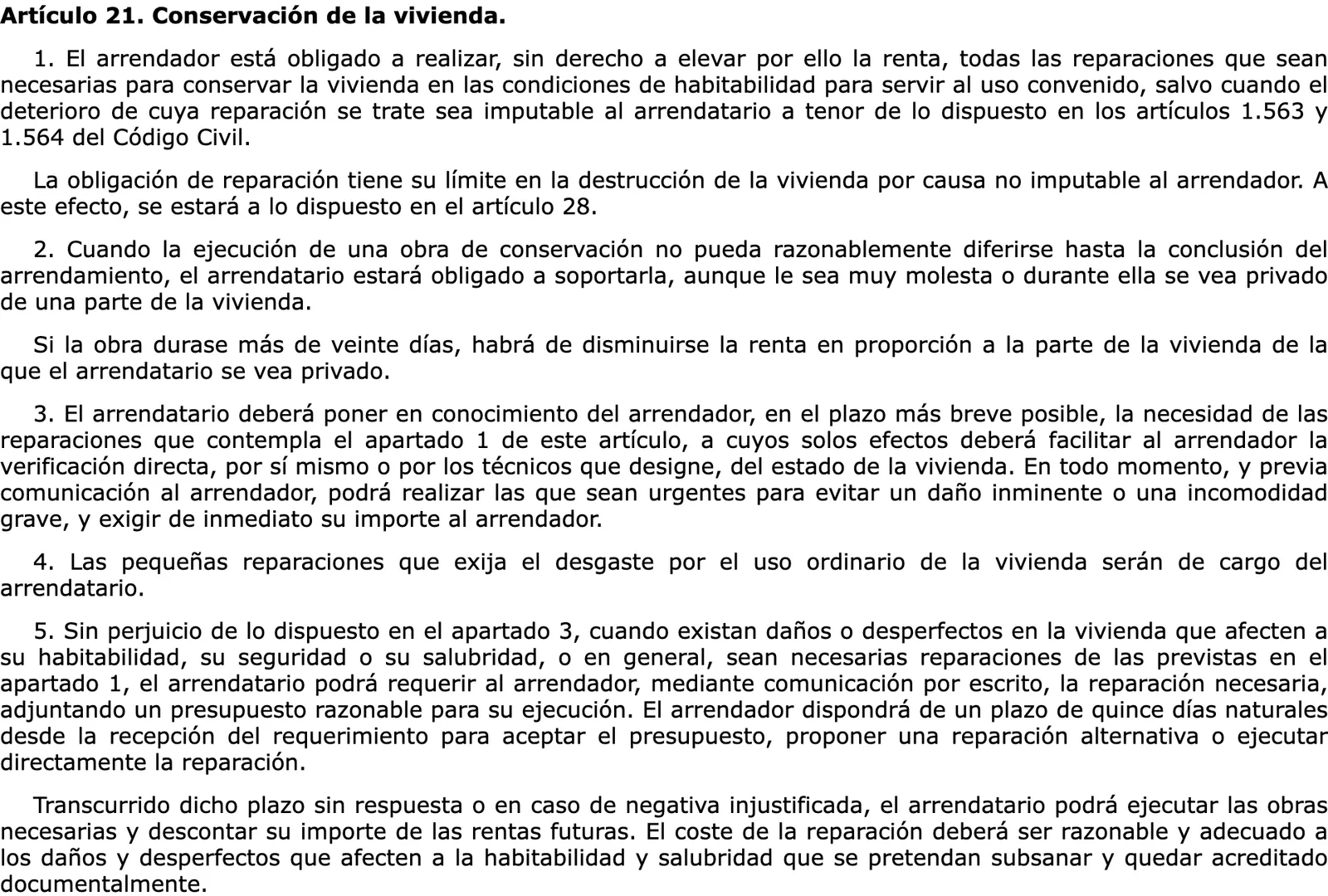
For damage affecting habitability, safety or health, send a written request with a reasonable quote. The landlord has fifteen calendar days to accept it, propose another repair or do the work. After that, or after an unjustified refusal, you may do the works and deduct the cost from future rent.
At the end, both sides must sign a written document recording the home’s condition. Without one, or if it records no damage, the home is presumed returned in adequate condition unless proven otherwise.
The landlord owes interest on any unreturned deposit balance one month after you hand back the keys.
When to ask the Generalitat or a lawyer
This guide does not replace legal advice.

- Ask the Generalitat’s deposit office whether your fianza was lodged.
- Ask a lawyer before you sign a contract whose clauses push past the limits above.
- Ask a lawyer before you refuse to leave at the end of a lease or file an extension request.
Photo credits
- The square where the padron office sits, in the centre of Valencia: Julián Monrabal, Wikimedia Commons (opens in a new tab) (CC0)
- The Generalitat palace in Valencia, seat of the regional government: Anual, Wikimedia Commons (opens in a new tab) (CC BY 3.0)
Step by step
- Check which rules applyRoyal Decree-law 29/2026 has amended the LAU since 8 October 2026; read the consolidated LAU on the BOE on signing day.
- Pick the lease typeA temporary-housing lease must run more than thirty-one days and, as a rule, no more than twelve months, and must state the reason.
- Check what you are asked to payNo more than one month's rent in advance, a one-month fianza, no agency fees and no rent-default insurance.
- Get the lease in writingA tenant can require the lease to be put in writing.
- Check the depositThe landlord must lodge the fianza with the Generalitat within one month; you can ask fianarren@gva.es whether it was.
- Register on the padrónBring the signed lease and a recent rent receipt.
Not confirmed: Advertised rents are often higher than the official medians: check current listings before you budget. Whether Congress validates Royal Decree-law 29/2026: it has thirty days from promulgation to vote, and no result is published yet. Check the BOE. Read the consolidated LAU on the BOE on the day you sign, and ask a lawyer if the text differs.
Reach readers planning life in Valencia. Advertise → hello@settlevalencia.com
Common questions
Can a landlord ask for more than one month's rent in advance?
No: the landlord may not demand advance payment of more than one month's rent. The fianza is separate and mandatory: one month of rent for housing. On top of that the parties may agree an extra guarantee of up to two months on a housing lease of up to five years.
Can a landlord make me buy rent-default insurance?
No: a landlord may not require you to take out rent-default insurance or similar cover. The parties may still agree an extra guarantee. On a housing lease of up to five years, or seven if the landlord is a company, it cannot exceed two months' rent.
Do I pay an agency fee when I rent?
No: management and contract-formalisation costs cannot be passed on to the tenant, directly or indirectly. That covers services to prepare, formalise, manage, amend or renew the lease. A non-essential service is billable to you only if you asked for it in writing after hearing it is optional and its price.
Can I leave a rental early?
Yes, after six months: you can leave a housing lease by giving the landlord at least thirty days' notice, and the landlord gets no compensation. In a temporary-housing lease you can leave after one month with ten days' notice. Check the contract for any other exit clause.
Is rent capped in Valencia?
Not by a tensioned-zone cap: València is not on any quarterly BOE list of declared tensioned zones, up to the list for the second quarter of 2026. The opening rent is what you and the landlord agree. Yearly updates cannot exceed the IRAV change, and without a new agreement cannot exceed two per cent until 31 December 2027.
Can I register on the padrón with a rental contract?
Yes. Bring a signed lease of more than six months, signed by everyone named in it, and the latest rent receipt or transfer from the last two months. Book a cita previa or phone 010. Padrón procedures at the Ajuntament de València are free.
How do I check the landlord lodged my deposit?
Send an email to fianarren@gva.es with a copy of your ID and the lease. The register is not public, and only the parties who signed the lease can ask. The fianza guide explains the surcharges and the complaint route.
Can I stay longer when my lease ends?
Possibly: Royal Decree-law 29/2026 provides an extraordinary extension of up to two more years, on the tenant's request. It covers leases whose compulsory extension ends before 31 December 2028. You must be up to date with rent and have paid monthly for the previous eight months.
Read next
General information checked against the sources listed above, not legal advice for your situation. Rules and office practice change; confirm with the immigration office or a licensed adviser before you act. See how guides are checked.
Spotted an error? Report it.