Health Insurance for a Spain Visa: What the Law Asks
Each long-stay route words the insurance rule differently. Digital nomads who will not join Spanish Social Security need an insurer authorised in Spain, with no travel, reimbursement-only, co-payment or waiting-period policy. The non-lucrative text says only: have health insurance. Any detail beyond that comes from your consulate.
Also in: Deutsch
On this page
- Which insurance does Spanish law require?
- What does the non-lucrative visa require?
- What does the digital nomad visa require?
- What does the student visa require?
- Who in the family needs a policy of their own?
- What about the EU registration certificate and retirees?
- What do individual consulates add?
- When can public cover replace a policy?
- What happens at TIE renewal?
- Step by step
- Common questions
About to buy a policy for a Spanish visa? Start with your route: the law words the insurance rule differently for each one. Individual consulates then add their own details on top.

Which insurance does Spanish law require?
Ley 14/2013 sets a general rule for the foreigners its mobility section covers, which includes the digital nomad route. The applicant shows health insurance, public or private, arranged with an insurer authorised to operate in Spain.
e) Contar con un seguro público o un seguro privado de enfermedad concertado con una Entidad aseguradora autorizada para operar en España.
Have public health insurance or private health insurance arranged with an insurance company authorised to operate in Spain.
BOE · Ley 14/2013, art. 62.3 e)
The Reglamento words the test separately for non-lucrative, student and reunification routes. The consulate is the first checkpoint: for non-lucrative visas it assesses the means and the insurance. The Oficina de Extranjería assesses the non-return commitment and the public-order requirements.
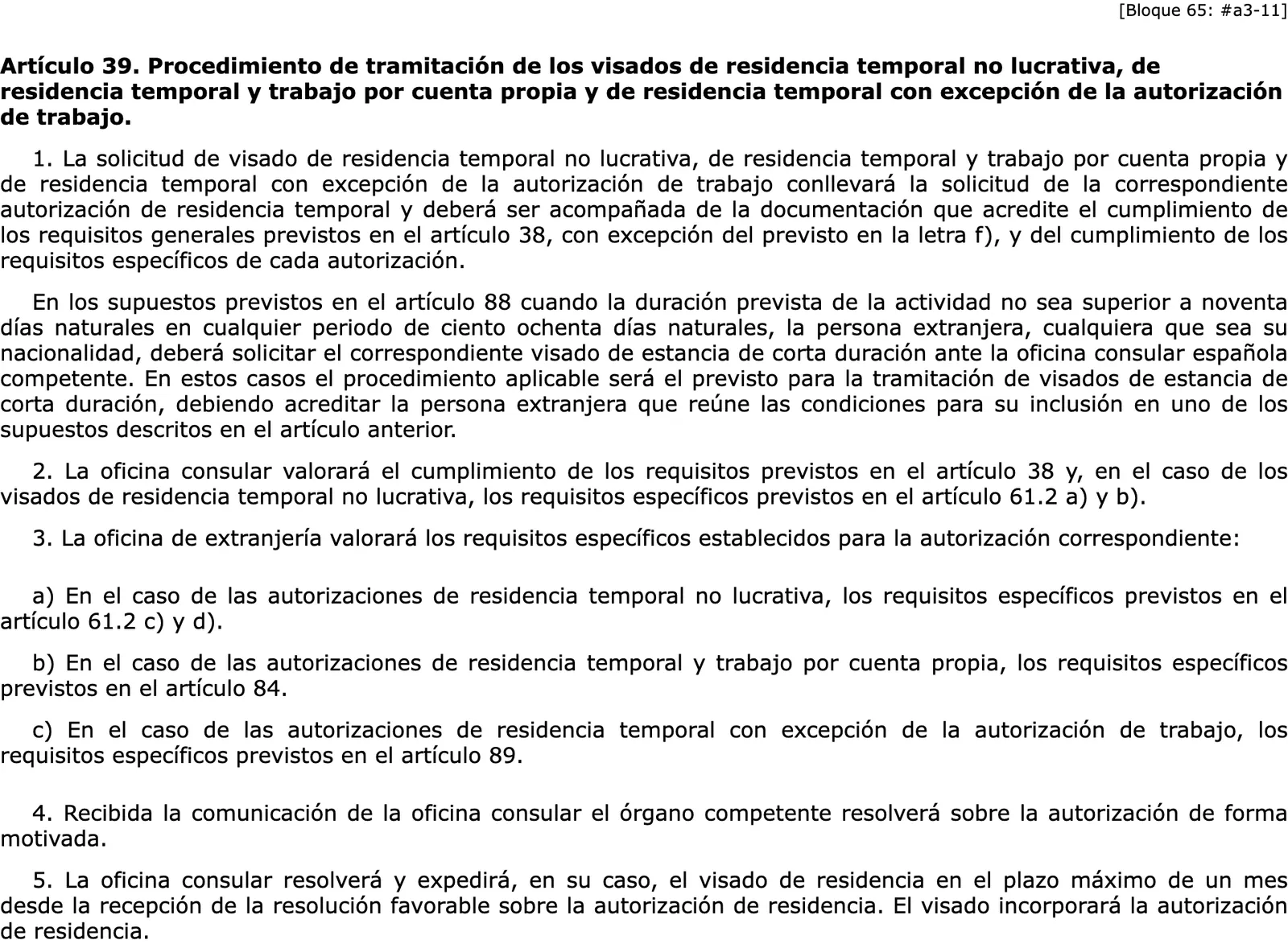
What does the non-lucrative visa require?
The text is short. Letter b of art. 61.2 reads: have health insurance. That letter adds no further definition.
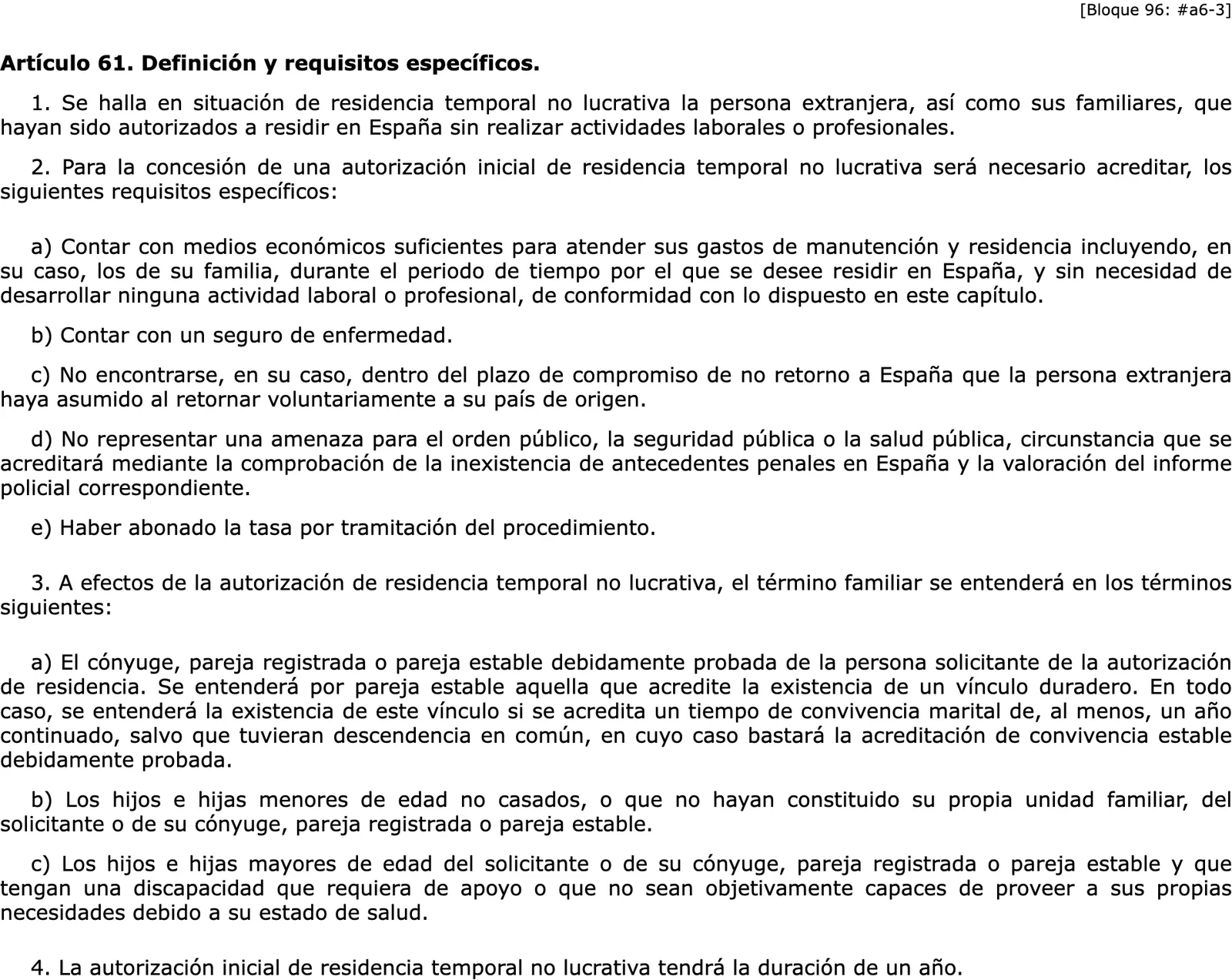
One filing covers both steps: the visa application includes the request for the residence authorisation. The status covers the applicant and authorised family members. Family here includes the spouse, registered or duly proven stable partner, and unmarried minor children of the applicant or partner.
Tip: rules on waiting periods or co-payments for this visa come from consulate pages, such as Montreal’s, not from this article of the Reglamento. Read the non-lucrative visa guide for the money test.
What does the digital nomad visa require?
This route has the strictest wording. The statute sets the authorised insurer. Ministry guidance adds the exclusions below, citing art. 62.3 e) of Ley 14/2013.

Four rules, each for the main applicant:
- If an international social security rule gives no health cover, you show public or private insurance with cover comparable to the Spanish public system’s.
- Travel insurance, reimbursement-only insurance, and policies with co-payments or waiting periods are not accepted.
- If you will register with Spanish Social Security once authorised, the insurance documents are not needed.
- If an international rule gives you health cover, you show a certificate of entitlement from the competent institution of the State where you are insured.
What if you keep your home country’s social security?
A certificate of applicable legislation exempts you from registering with Spanish Social Security. If the agreement does not cover the Spanish public health system, you show medical insurance that does. See the digital nomad guide for the rest of the file.
What does the student visa require?
Student applicants show health insurance with an insurer authorised to operate in Spain, with benefits similar to the public system’s common basic services, valid for the planned stay.

Scope: this is the long-stay visa for studies, student mobility, volunteering or training. Students from the EU have their own text, covered below.
Who in the family needs a policy of their own?
Short answer: it depends on the route, and on whether the main applicant joins Spanish Social Security. Take your route below.
A teleworker’s family members
The documents list public or private health insurance, with the same exclusions as for the main applicant. A family member skips that document in one case. The holder will register with Spanish Social Security, or is registered and up to date with contributions, and the family member can be the holder’s beneficiary.
Two exceptions matter. A de facto union that is not registered in a public register does not make the partner a beneficiary, so the partner shows private insurance. If the holder is covered by an international rule, a certificate showing the family member is a beneficiary is needed.
A non-lucrative applicant’s family
The status covers the applicant and authorised family. The insurance letter of the Reglamento does not say how each family member proves cover, so ask your consulate whether one family policy is enough.
A student’s family members
Family members of holders of a long-stay higher-education authorisation may apply while the holder has at least ninety days left. They must have health insurance. The consulate verifies that requirement at a consular application.
A reunified family
The sponsor must hold health insurance for the sponsor and for the family members named in art. 66. The application includes that insurance. The sponsor can file once they have lived in Spain at least one year and have applied to reside at least another year.
What about the EU registration certificate and retirees?
EU and EEA citizens who will not work in Spain can still stay beyond three months. On that route they need sufficient resources for themselves and their family, plus health insurance covering all risks in Spain. An EU student enrolled in a recognised centre faces the same insurance test, with a declaration of resources.

A retiree from outside the EU who will not work fits the non-lucrative status. EU pensioners: the S1 guide covers the S1 route. Ask the police office when you file whether your S1 satisfies the insurance condition.
What do individual consulates add?
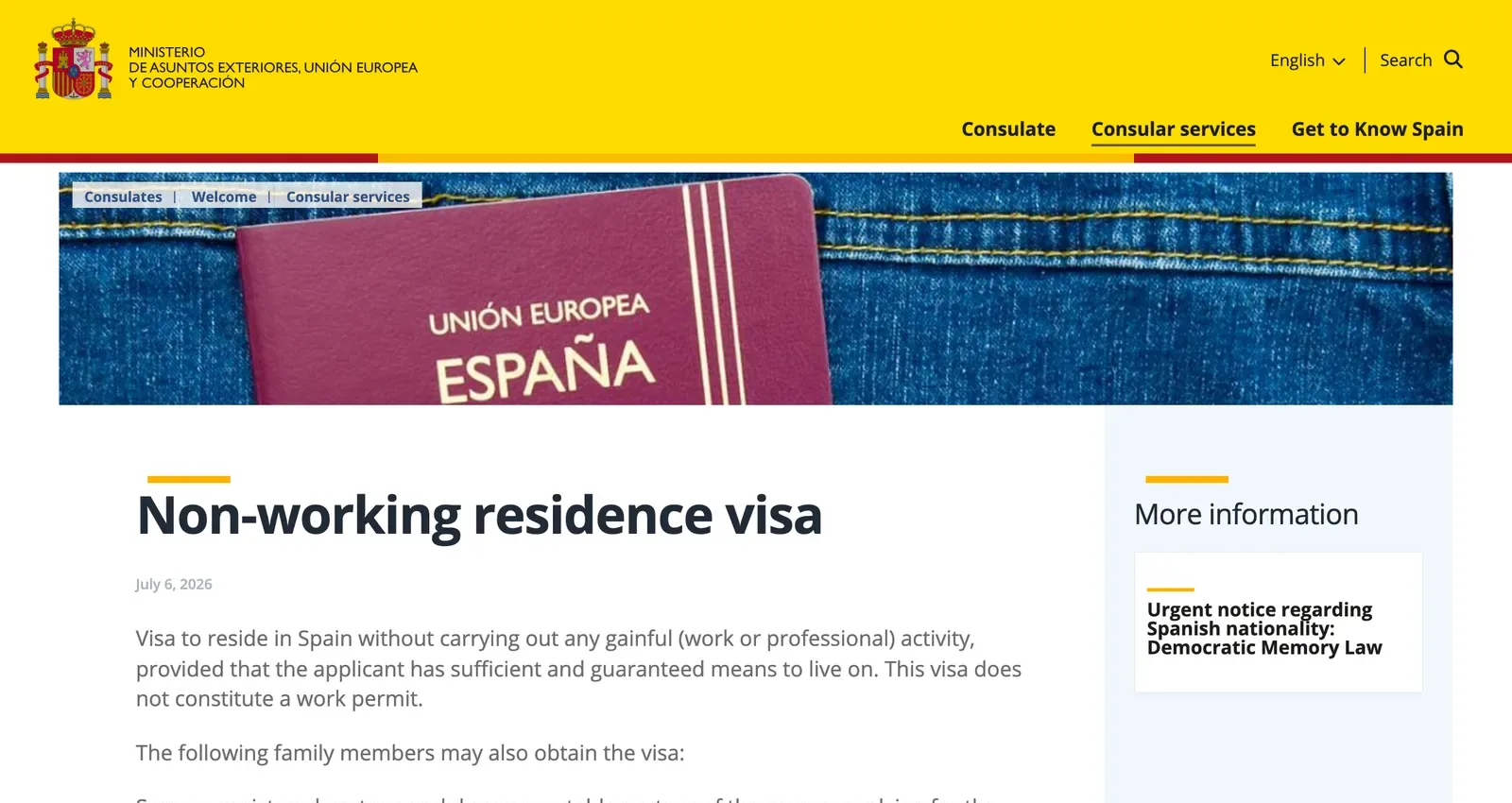
Everything in this section is consulate practice, not the Reglamento. Treat each line as that consulate’s own list for the non-lucrative visa.
- Montreal: the policy covers all risks insured by Spain’s public health system, and it runs at least as long as the visa.
- Montreal: no waiting period, no co-payment, no coverage cap; foreign policies with maximum limits are accepted exceptionally if they meet the listed features.
- Montreal: repatriation and evacuation cover is not required.
- London: the policy covers all the risks insured by the public health system.
- London: a receipt of S1 registration on the Social Security website is also accepted as medical insurance for the non-lucrative visa.
Tip: ask your own consulate for its current list before you buy.
When can public cover replace a policy?
Four cases, each with its own scope.
- Digital nomad main applicant: joining Spanish Social Security replaces the policy.
- Digital nomad family: a beneficiary of a registered holder skips the document.
- Non-lucrative visa: the Reglamento text reads: health insurance. The London consulate also accepts a receipt of S1 registration.
- After arrival, a convenio especial gives access to the common basic services of the National Health System.
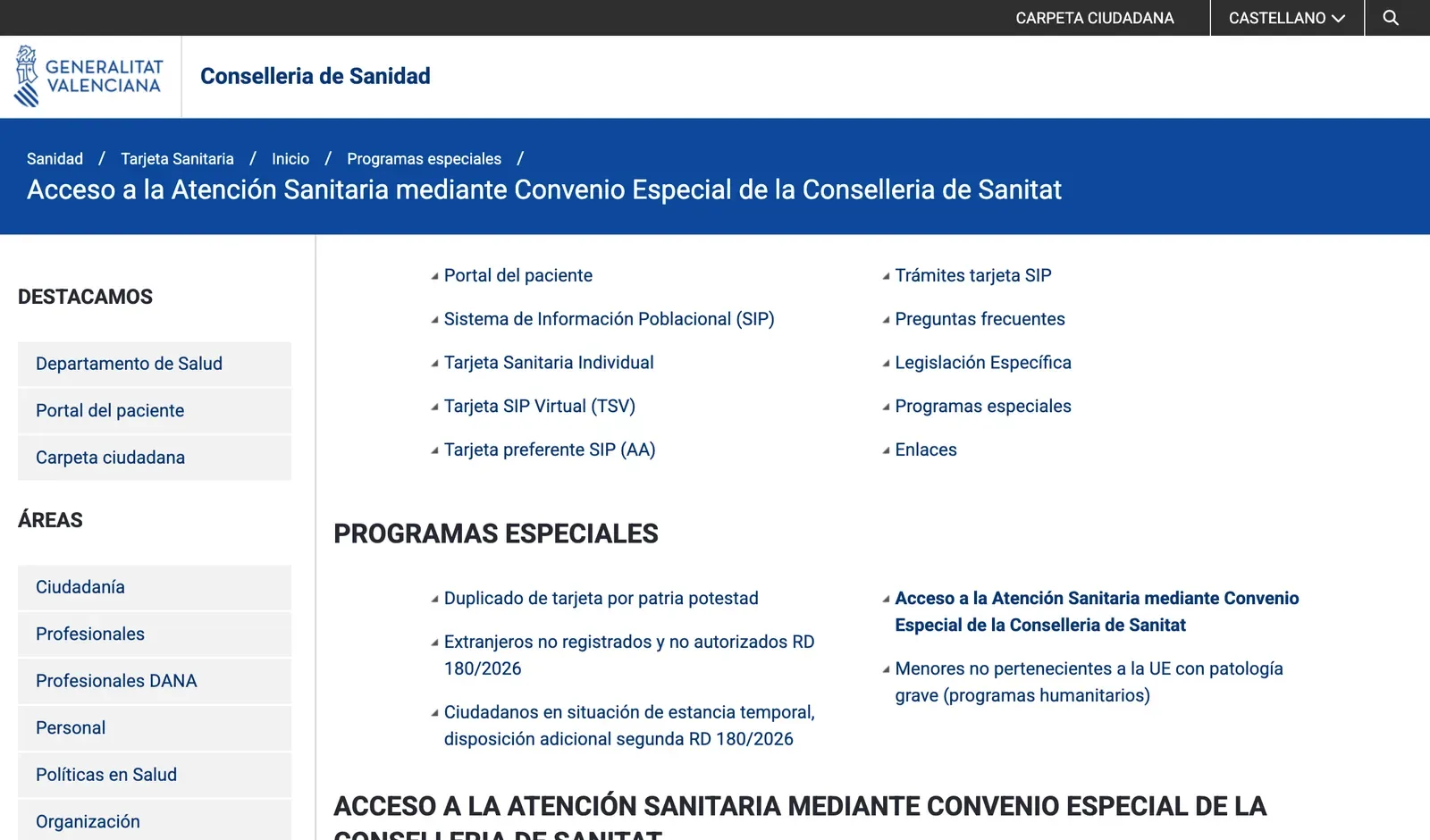
The convenio is not a day-one option. It needs a continuous minimum of one year of effective residence before you apply. You must be on the padrón of a municipality in the Comunitat Valenciana, and have no other access to public health protection.
In the Comunitat Valenciana, the Conselleria de Sanitat charges a monthly fee of €60 under 65 and €157 at 65 or over. Full steps are in the convenio especial guide.
Holding a private policy does not close the public door in the Comunitat Valenciana. If the policy does not cover certain treatments (serious, sudden or infectious illness), you may ask for universal healthcare access for those treatments. At the nearest health centre, a foreign resident with private insurance gets an inclusion document with the SIP number. See the SIP guide.
What happens at TIE renewal?
For non-lucrative residence, the insurance is a renewal condition. You must have kept it during the authorisation you are renewing and continue with it.
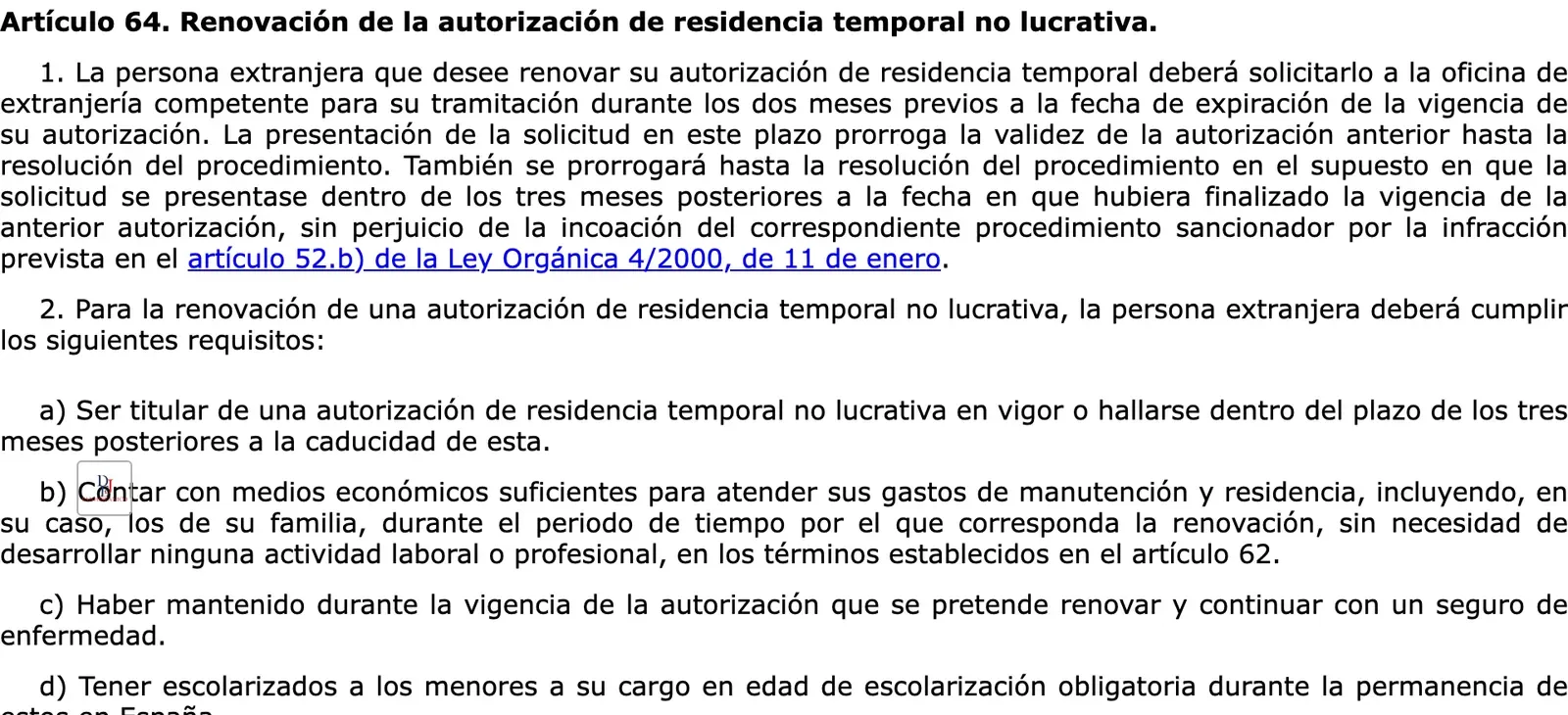
c) Haber mantenido durante la vigencia de la autorización que se pretende renovar y continuar con un seguro de enfermedad.
Have maintained, during the validity of the authorisation to be renewed, and continue with, health insurance.
BOE · Real Decreto 1155/2024, art. 64.2 c)
The renewal file includes documents proving the means and the insurance for the period you want to renew. Apply to the Oficina de Extranjería during the two months before expiry; filing in that window extends the old authorisation until a decision.
Start the TIE itself on time: a non-lucrative holder applies in person within one month of entering Spain. The TIE guide has the appointment steps.
Digital nomads follow Ley 14/2013 instead. On the visa, those who want to stay on may apply for the residence authorisation within the sixty days before the visa expires, as long as the conditions are maintained. Holders of that authorisation may renew for two-year periods on the same condition.
Photo credits
- The Hospital General in Valencia: Wikimedia Commons (opens in a new tab), Joanbanjo (CC BY-SA 3.0)
- The Ciutat de les Arts i les Ciencies beside the Turia park in Valencia: Areyes108, Wikimedia Commons (opens in a new tab) (CC BY-SA 4.0)
- A health centre building in Valencia: Wikimedia Commons (opens in a new tab), 19Tarrestnom65 (CC BY-SA 4.0)
- The Estacio del Nord, the railway station in the centre of Valencia: Diego Delso, Wikimedia Commons (opens in a new tab) (CC BY-SA 4.0)
Step by step
- Identify your routeThe wording differs by route: digital nomad, non-lucrative, student, reunification, EU certificate.
- Check whether you need a policy at allA digital nomad who will register with Spanish Social Security skips the insurance documents.
- Match the policy to the wordingInsurer authorised in Spain; no travel, reimbursement-only, co-payment or waiting-period policy for the digital nomad route.
- Ask your consulate for its listThe consulate assesses the insurance for non-lucrative visas; each consulate's page may add its own details.
- Plan the renewalKeep the insurance running and renew during the two months before expiry.
Not confirmed: One policy for the whole family: the texts do not say if it is accepted; ask your consulate. Convenio especial at renewal: the insurance condition does not say if it counts; ask the Oficina de Extranjería. Digital nomad renewal: whether insurance is checked again is not stated.
Reach readers planning life in Valencia. Advertise → hello@settlevalencia.com
Common questions
Does the law ban co-payments and waiting periods?
Not in the statute's own words. For the digital nomad route, the ministry's guidance rejects policies with co-payments or waiting periods. The non-lucrative Reglamento text says only: have health insurance. The Montreal consulate's page asks for no waiting period and no co-payment.
Can I use travel insurance for a visa?
No for the digital nomad visa: the ministry's guidance does not accept travel insurance. For the non-lucrative visa, the Montreal consulate's page asks for health insurance, not travel insurance. Ask your own consulate before buying.
Does my policy have to be from a Spanish insurer?
Not Spanish, but authorised to operate in Spain. That is the digital nomad wording. The student visa text asks the same, with benefits similar to the public system's common basic services. The non-lucrative text names no insurer, so check your consulate's list.
Do I need insurance if I will join Spanish Social Security?
Not as a digital nomad main applicant: the insurance documents are not needed when you will register with Spanish Social Security once authorised. A family member also skips them if you are or will be registered and the family member can be your beneficiary.
Does my spouse or partner need a separate policy?
It depends on the route. For a teleworker's partner in an unregistered de facto union, yes: private insurance is required. For a student's family member, the Reglamento asks for health insurance. For reunification, the sponsor holds it for self and family.
What happens to the insurance at TIE renewal?
For non-lucrative residence you must have kept insurance throughout the authorisation and continue with it. The renewal file includes documents proving the insurance for the renewal period. Apply during the two months before expiry.
Can a convenio especial replace a policy?
Not at the first visa: it needs a continuous minimum of one year of effective residence before you apply. It also needs padrón registration in a municipality of the Comunitat Valenciana and no other access to public health protection.
Read next
General information checked against the sources listed above, not legal advice for your situation. Rules and office practice change; confirm with the immigration office or a licensed adviser before you act. See how guides are checked.
Spotted an error? Report it.