Spain Non-Lucrative Visa Requirements (2026)
Planning to live in Spain without working? The non-lucrative visa is built for that. You must show monthly means of 400% of the IPREM, plus 100% for each dependent, and health insurance. You apply at the Spanish consulate, and the visa application includes the residence authorisation.
Also in: Deutsch
On this page
Is the non-lucrative visa for you?
Living off savings or a pension? Non-lucrative residence is for a foreigner, and their family, authorised to live in Spain without carrying out work or professional activity. Retirees, investors with passive income and people living on savings use it.

Three things decide whether you qualify.
- Sufficient means to cover your maintenance and residence costs, including your family’s, for the whole period you want to live in Spain, without needing to work.
- Health insurance.
- No threat to public order, security or health, checked through the absence of criminal records in Spain and the police report.
You also pay the processing fee. A police report with records does not by itself and automatically lead to refusal.
For any remote work, use the digital nomad visa requirements instead. A non-lucrative holder cannot count remote work done under the permit. Spanish consulates in the United States ask for a notarised affidavit that you will do no paid work, in person or online.
How much money do you need?
The means are minimums, measured when you apply for the visa or renew. You need an amount representing 400% of the IPREM each month for yourself, or its legal equivalent in foreign currency. For each dependent family member you add 100% of the IPREM.
The IPREM is €600 a month. That makes about €2,400 a month for you and €600 for each dependent.
| Applicant | Share of the IPREM | Per month |
|---|---|---|
| Main applicant | 400% | €2,400 |
| Each dependent | 100% | €600 |
The total must equal the monthly figure multiplied by the length of the authorisation you ask for. For one year, that is about €28,800 for a single applicant and €36,000 with one dependent.
Totals by family size
Count each dependent at 100% of the IPREM on top of the holder’s 400%. The rows below are totals worked out from those two percentages and the €600 IPREM.
| People | Per month | For one year |
|---|---|---|
| Holder alone | €2,400 | €28,800 |
| Holder and 1 dependent | €3,000 | €36,000 |
| Holder and 2 dependents | €3,600 | €43,200 |
| Holder, spouse and 2 children | €4,200 | €50,400 |
The family move guide sets out the order of steps.
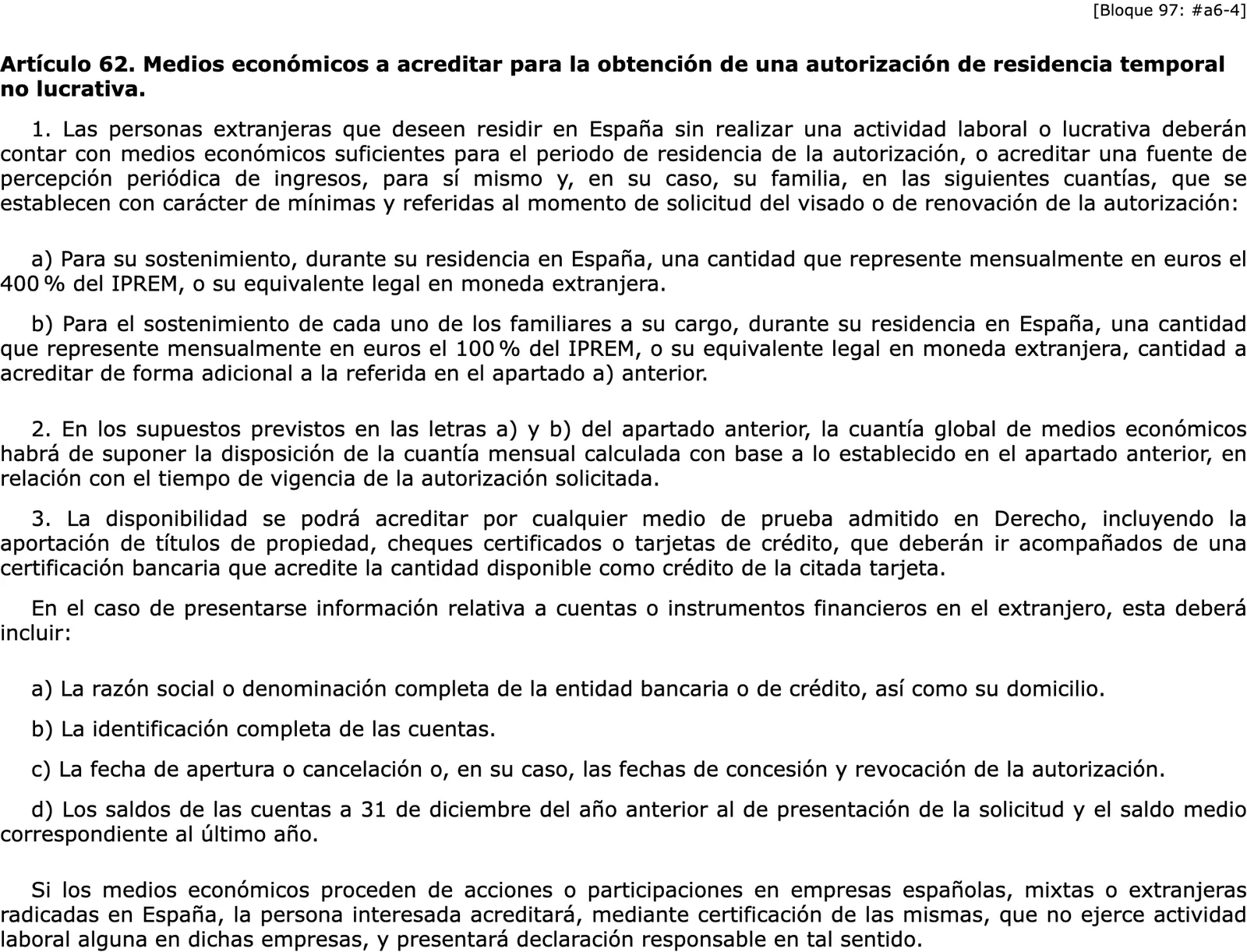
Prove means with any legally admissible evidence, including property titles, certified cheques or credit cards with a bank certificate of available credit. Foreign account details must include balances at 31 December of the year before filing and the average balance of the last year.
If the funds come from shares in companies based in Spain, certify that you do no work in them and add a sworn statement.
Documents to prepare
Every foreign document is legalised or apostilled and, if it is not in Spanish, translated. The lists below combine the Reglamento’s rules with the Montreal consulate’s list. Check your own consulate’s list before you book.
Application and identity
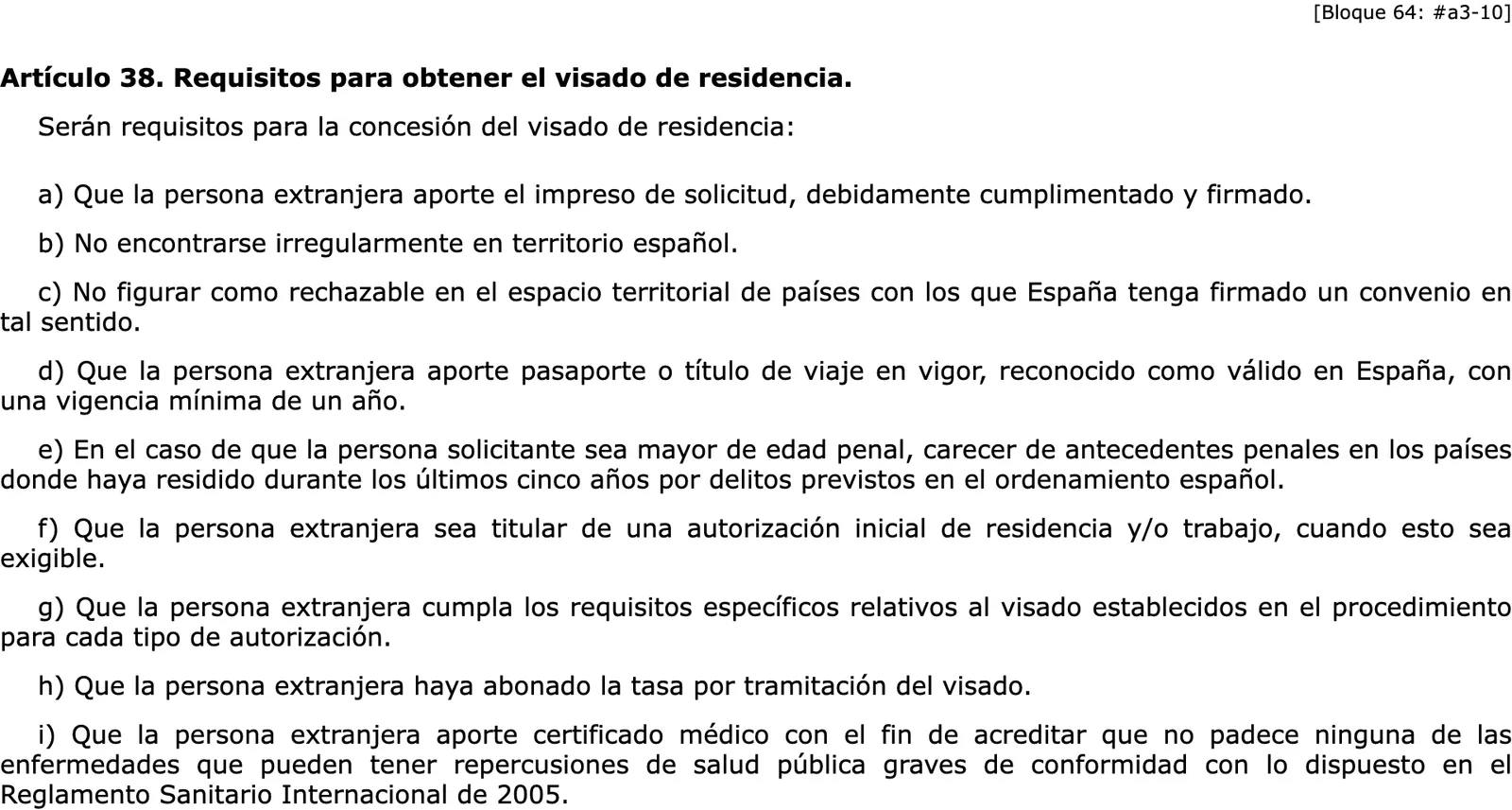
- The national visa application form and the EX-01 residence application, each signed by the applicant.
- A passport valid for at least one year.
Record and medical certificate
- A criminal record certificate from every country where you lived in the last five years, showing no offences under Spanish law, for adult applicants.
- A medical certificate showing no disease with serious public health repercussions under the International Health Regulations. The Montreal consulate wants it from a registered doctor within the 3 months before you apply.
Health insurance
The Reglamento only requires health insurance; each consulate sets the detail. The Montreal consulate wants an insurer authorised to operate in Spain, covering all risks of the Spanish public system. The policy must last at least the whole length of the visa, and travel insurance does not count. It must have no waiting period, co-payment or coverage limit.
The same consulate may exceptionally accept foreign insurers with coverage limits, if they meet the required characteristics. The consulate in London also accepts the S1 registration receipt on the Social Security website. Before you buy a policy, use the public vs private healthcare guide.
Family
Family means the spouse, registered partner or duly proven stable partner. It also means unmarried minor children, or children who have not formed their own family unit. Show the relationship with birth or marriage certificates from the civil registry, a partner registration certificate or other proof.
The US and UK visa documents guide covers the paperwork for US and UK passport holders.
Where do you apply?
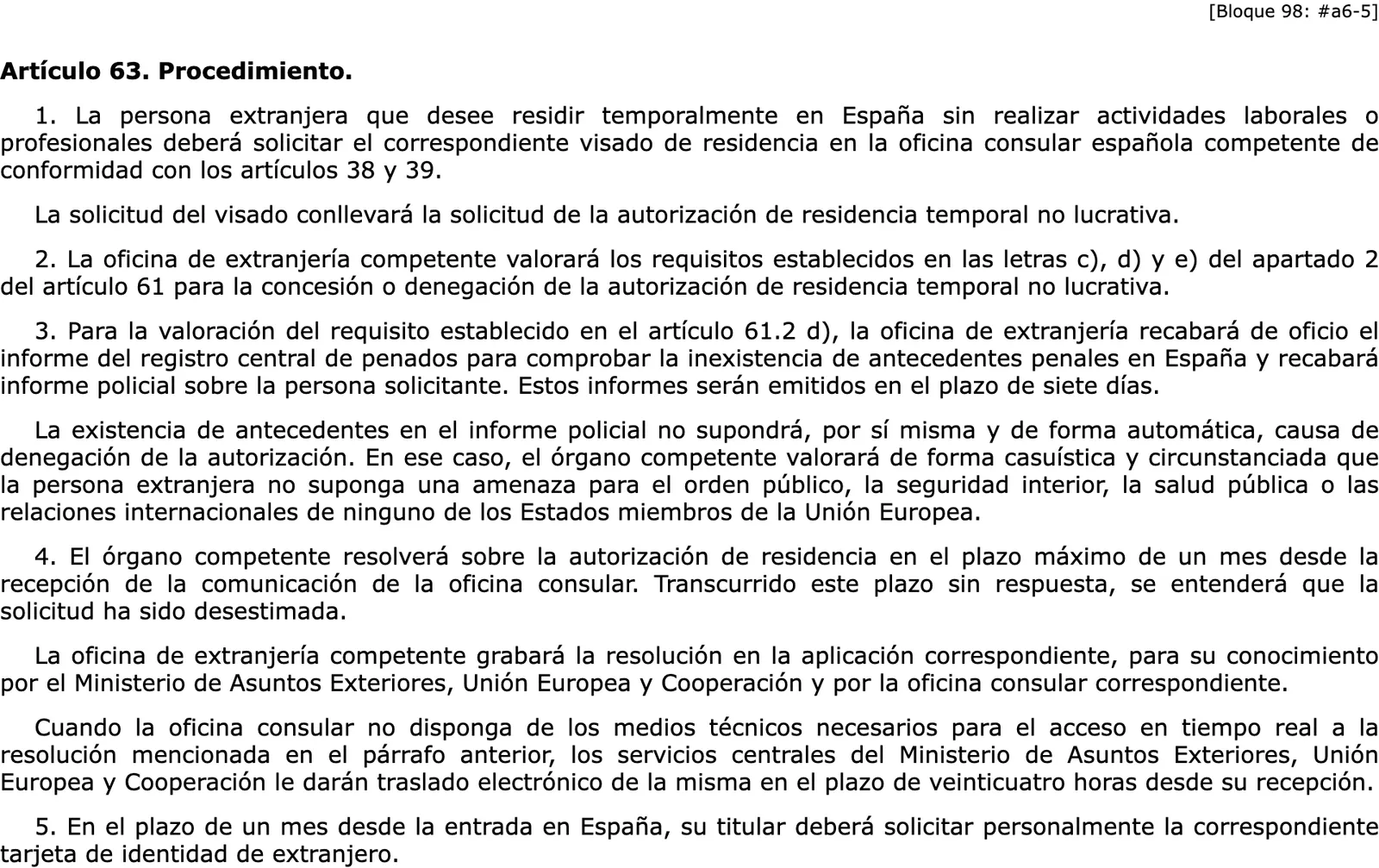
Apply at the consulate, not in Spain: the residence visa goes to the competent Spanish consulate. The visa application includes the application for the authorisation. No text in the rules sets another route for the first application.
- Pay the fees and complete the EX-01 and the visa form.
- File at the competent Spanish consulate.
- The consulate sends the file to the Oficina de Extranjería, which decides within one month.
- No answer within that month means the application is deemed rejected.
- After a favourable decision, the consulate issues the visa within one month, and the visa includes the authorisation.
The Montreal consulate issues the visa for 365 days. A refusal can be appealed for reconsideration at the consulate within 1 month from the day after notification.
Fees
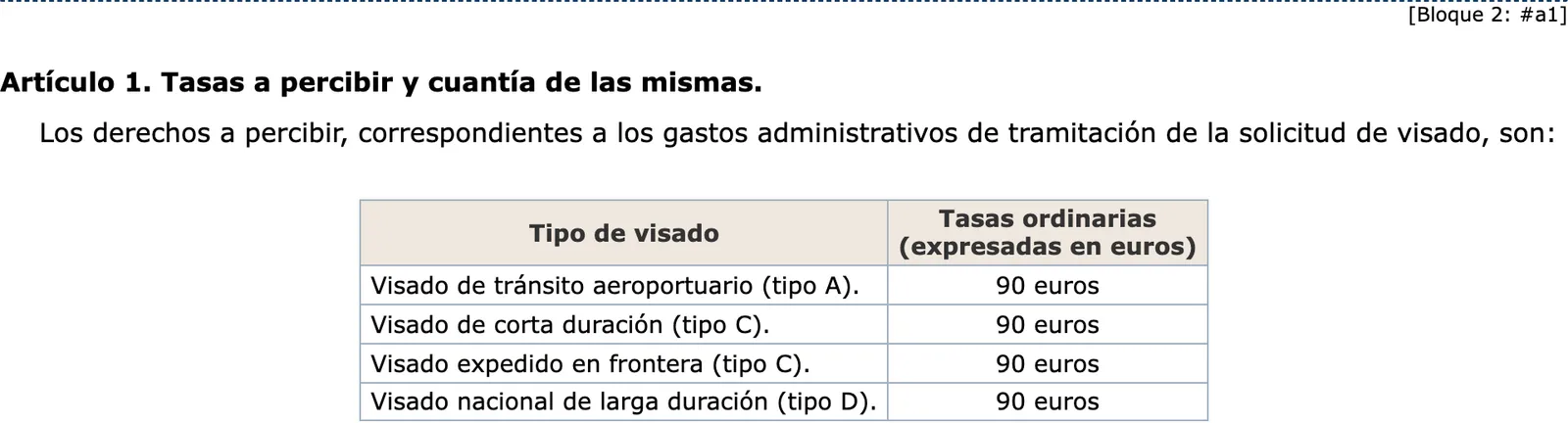
| Step | Fee | Where |
|---|---|---|
| National long-stay visa (type D) | €90 | Consulate |
| Initial residence authorisation | €10.94 | Modelo 790 código 052 |
| TIE, first grant | €16.08 | Modelo 790 código 012 |
| Renewal of the authorisation | €16.40 | Self-assessed official form |
| TIE, renewal | €19.30 | Modelo 790 código 012 |
The consulate collects the visa fee in local currency, so the figure on the day can differ from €90. Residence and TIE fees are self-assessed on an official form. The authorisation fee is raised each year by the budget laws, so confirm it on the payment form.
After you arrive in Valencia
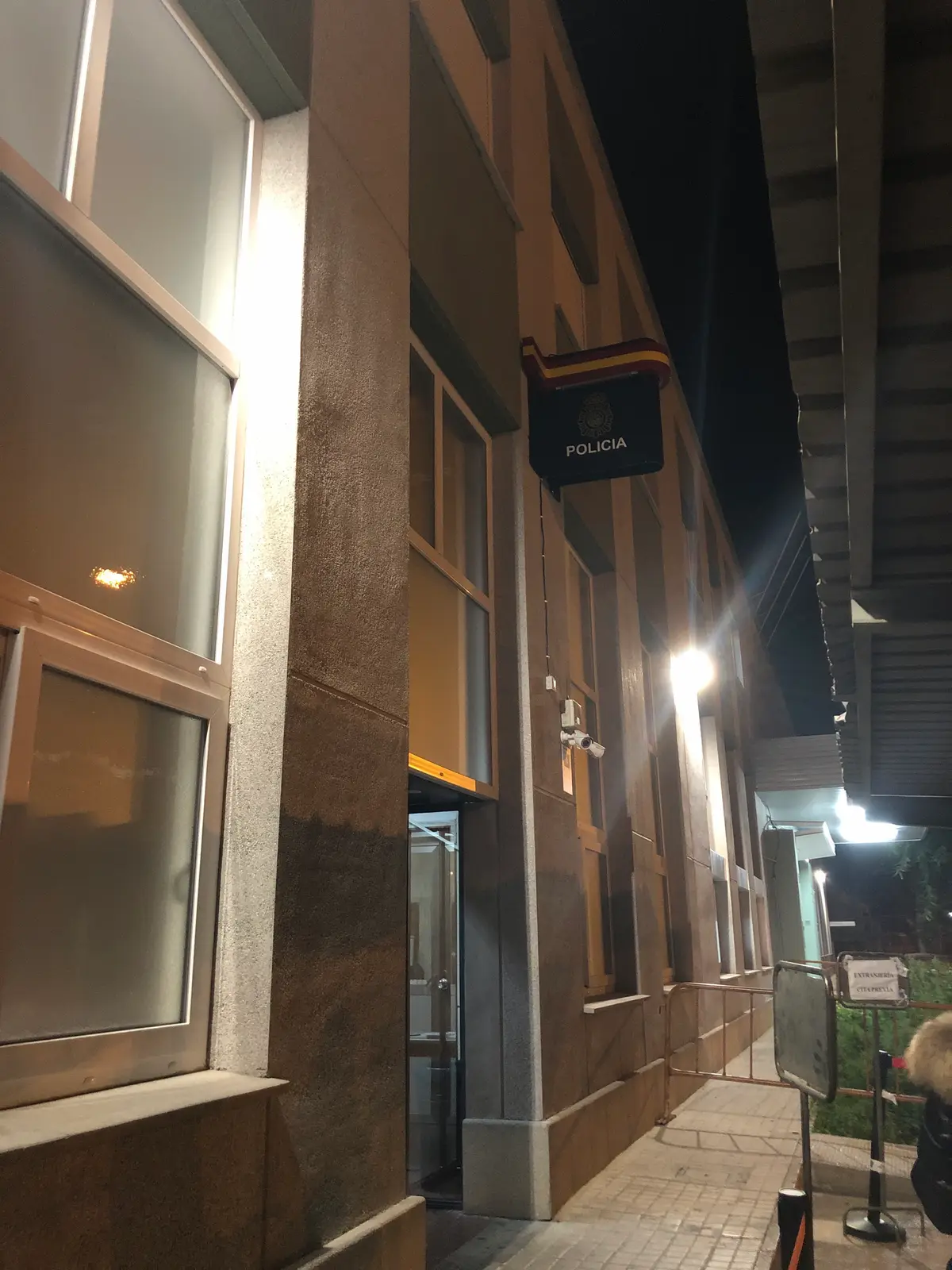
The TIE comes first. Within one month of entering Spain you must request the TIE in person. In Valencia city, non-EU cards are issued at the Comisaría de Patraix, calle dels Gremis 6. The Oficina de Extranjería does not issue the TIE.
Carrer dels Gremis 6, 46014 Valencia, Spain · Open in Google Maps (opens in a new tab)
Open in Google Maps (opens in a new tab)
Pay Modelo 790 código 012 first and bring the receipt. Police appointments are a separate system from the Ministry’s cita previa. The TIE guide for Valencia covers booking. Register on the padrón and get health access through the SIP card guide once you have an address.
Renewing in Valencia
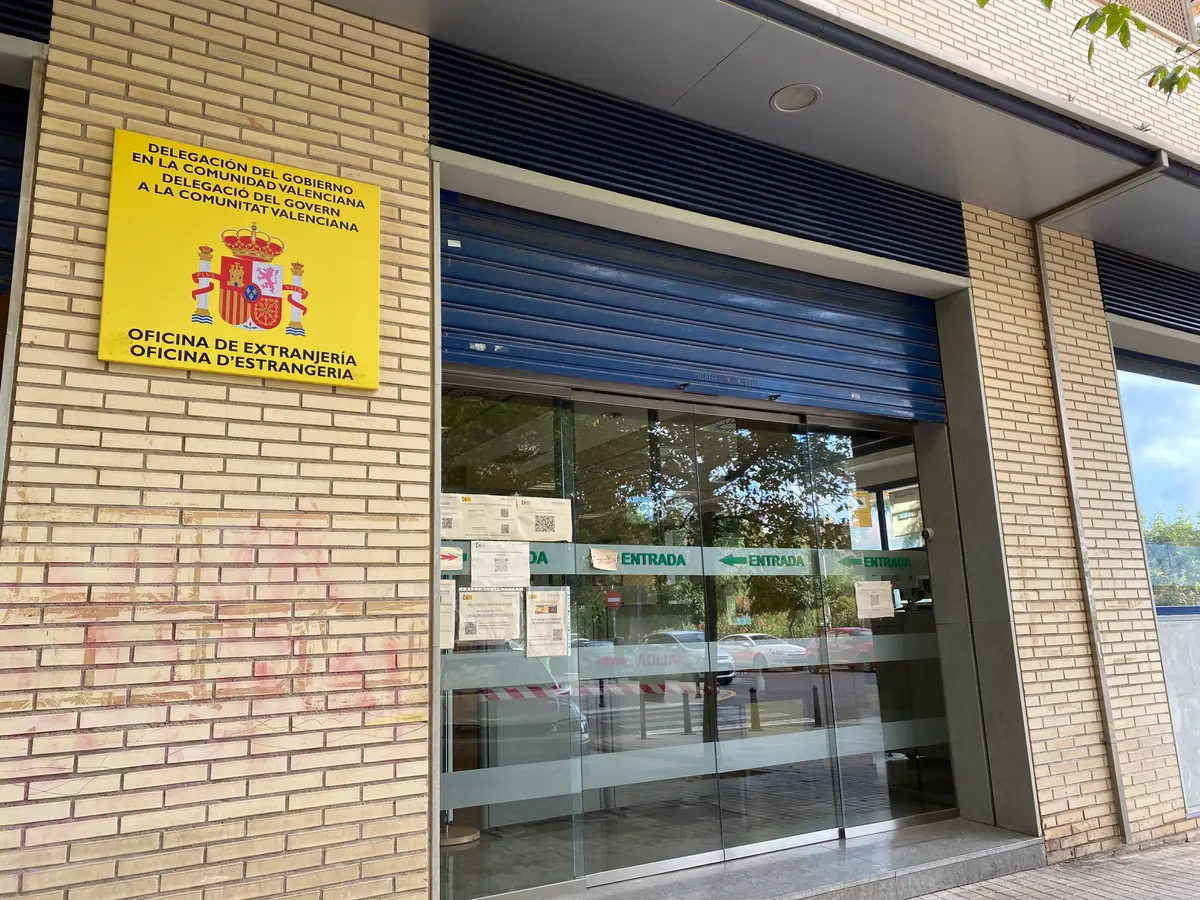
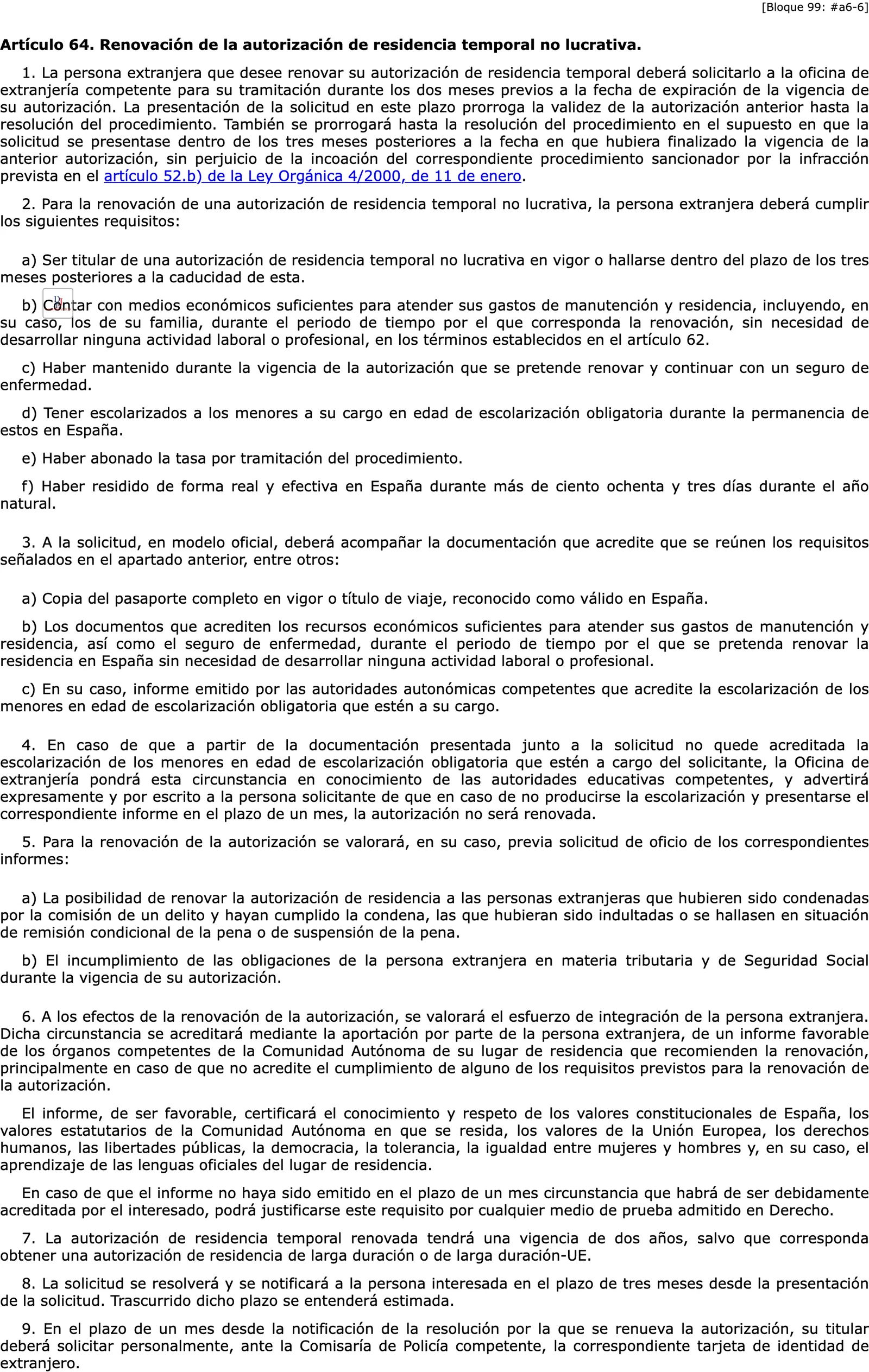
Renew at the Oficina de Extranjería in the two months before the authorisation expires. Filing in that window extends the old authorisation until resolution. A renewal filed within three months after expiry also extends validity, without prejudice to a penalty procedure.
Carrer de la Diputada Clara Campoamor 23, 46019 Valencia, Spain · Open in Google Maps (opens in a new tab)
Open in Google Maps (opens in a new tab)
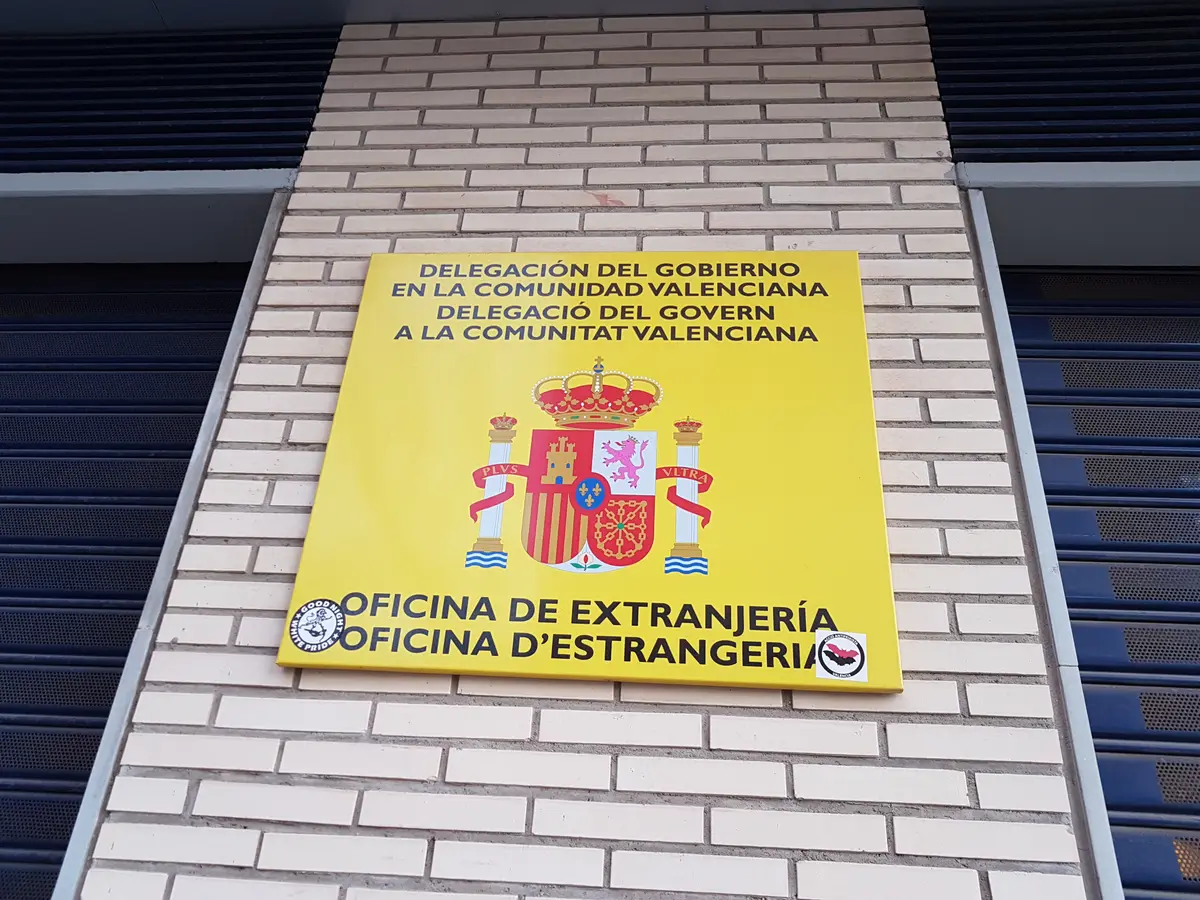
The Oficina de Extranjería, Sede 1, is at Calle Diputada Clara Campoamor, 23. It opens Monday to Friday 9:00-14:00 generally, and Monday to Thursday 9:00-17:00 with appointment. In summer, 16 June to 15 September, it opens 8.30-14.30.
What renewal needs
- A valid non-lucrative authorisation, or filing within the three months after it lapsed.
- Real and effective residence in Spain for more than 183 days during the calendar year.
- Sufficient means under the same amounts as the first application.
- Health insurance kept throughout the authorisation, and continued.
- Children of school age enrolled while they are in Spain.
The office weighs any breach of tax and Social Security obligations during the authorisation. If the papers do not show school enrolment, it warns you in writing that without a school report within one month the authorisation will not be renewed.
A renewed authorisation lasts two years, unless you qualify for long-term residence. The office decides within three months, and after that period the renewal is deemed granted. Within one month of notification, request the new TIE in person at the police station.
Where applications go wrong
- Remote work on this permit. The permit does not authorise work, and remote work cannot be counted later. Switch to a work permit first.
- Insurance with a co-payment or waiting period. Replace it before you file.
- Money shown as a lump sum. The total must match the monthly figure times the authorisation length.
- Too many days abroad before renewal. Renewal needs more than 183 days of real residence in the calendar year. Plan travel around it.
- No school report for a child. Obtain it within one month of the office’s warning.
- Visa refused. Appeal for reconsideration at the consulate within 1 month.
After five continuous years of residence, the next step is long-term residence; the permanent residency guide covers it.
Photo credits
- The Ciutat de les Arts i les Ciències beside the Turia park in Valencia: Areyes108, Wikimedia Commons (opens in a new tab) (CC BY-SA 4.0)
- Photos and clips uploaded to Google Maps (Policia Nacional foreigners office Valencia on Google Maps (opens in a new tab), Valencia foreigners office on Google Maps (opens in a new tab)) by Nicole Qian, Pablo Cettour, Jaime Pascual.
Step by step
- Check the no-work rule and the money testThe permit is for residence without work. Show 400% of the IPREM a month, plus 100% per dependent.
- Buy compliant health insuranceHealth insurance, not travel insurance, with no waiting period, co-payment or coverage limit, covering the whole visa.
- Collect and legalise the documentsForeign documents are legalised or apostilled and translated if not in Spanish.
- Apply at the consulateFile the visa and the EX-01 residence application at the competent Spanish consulate.
- Get the TIE in ValenciaRequest the TIE in person within one month of entering Spain.
Not confirmed: Whether your consulate wants a notarised no-work affidavit. Check its document list before you book. The visa fee in your local currency. Confirm it at the consulate.
Reach readers planning life in Valencia. Advertise → hello@settlevalencia.com
Common questions
Can I work remotely on a non-lucrative visa?
No. The permit covers residence without work or professional activity. Remote work done under it cannot be counted later for a teleworker permit, and working without authorisation is an infringement.
Can I apply from inside Spain?
A foreigner who wants to live in Spain without working must apply for the residence visa at the competent Spanish consulate. No route for filing the first application inside Spain is set out.
How much money do I need in 2026?
€2,400 a month for the main applicant. The test is 400% of the IPREM a month for the main applicant and 100% for each dependent. With the IPREM at €600, that is €2,400 and €600 a month.
How long does the visa last?
One year for the initial authorisation. The consulate in Montreal issues the visa for 365 days. A renewed authorisation lasts two years.
Is a policy with a co-payment acceptable?
No, at least not at the Montreal consulate: the policy must have no waiting period, co-payment or coverage limit and cover the whole visa. Buy that kind of policy unless your own consulate's list says otherwise.
Can my partner and children come with me?
Yes. Family means the spouse, registered or proven stable partner, and unmarried minor children or children without their own family unit. Each family member adds 100% of the IPREM to the money test.
What do I need to renew the visa?
More than 183 days in Spain: to renew, you must have resided effectively in Spain for more than 183 days during the calendar year. You also need means, continuous health insurance and school enrolment for children of school age.
What if the visa is refused?
An appeal for reconsideration can be filed at the consulate within 1 month from the day after notification.
Read next
General information checked against the sources listed above, not legal advice for your situation. Rules and office practice change; confirm with the immigration office or a licensed adviser before you act. See how guides are checked.
Spotted an error? Report it.