Open a Bank Account in Spain (Valencia): Rights and Fees
Need a bank account for your first month in Valencia? Banks that offer payment accounts must offer a basic one to people who legally reside in the EU, asylum seekers and people who cannot be expelled. It costs at most 3 euros a month. Bring a valid passport or TIE. A refusal comes in writing within ten working days.
Also in: Deutsch
On this page
Just arrived and every bank seems to want a different paper? Newcomers have a legal right to a basic bank account, not to the account of their choice. Below: who holds that right, which ID the bank checks, what the account costs and what to do if a bank says no. No bank is ranked here.
Do you have a right to a basic account?
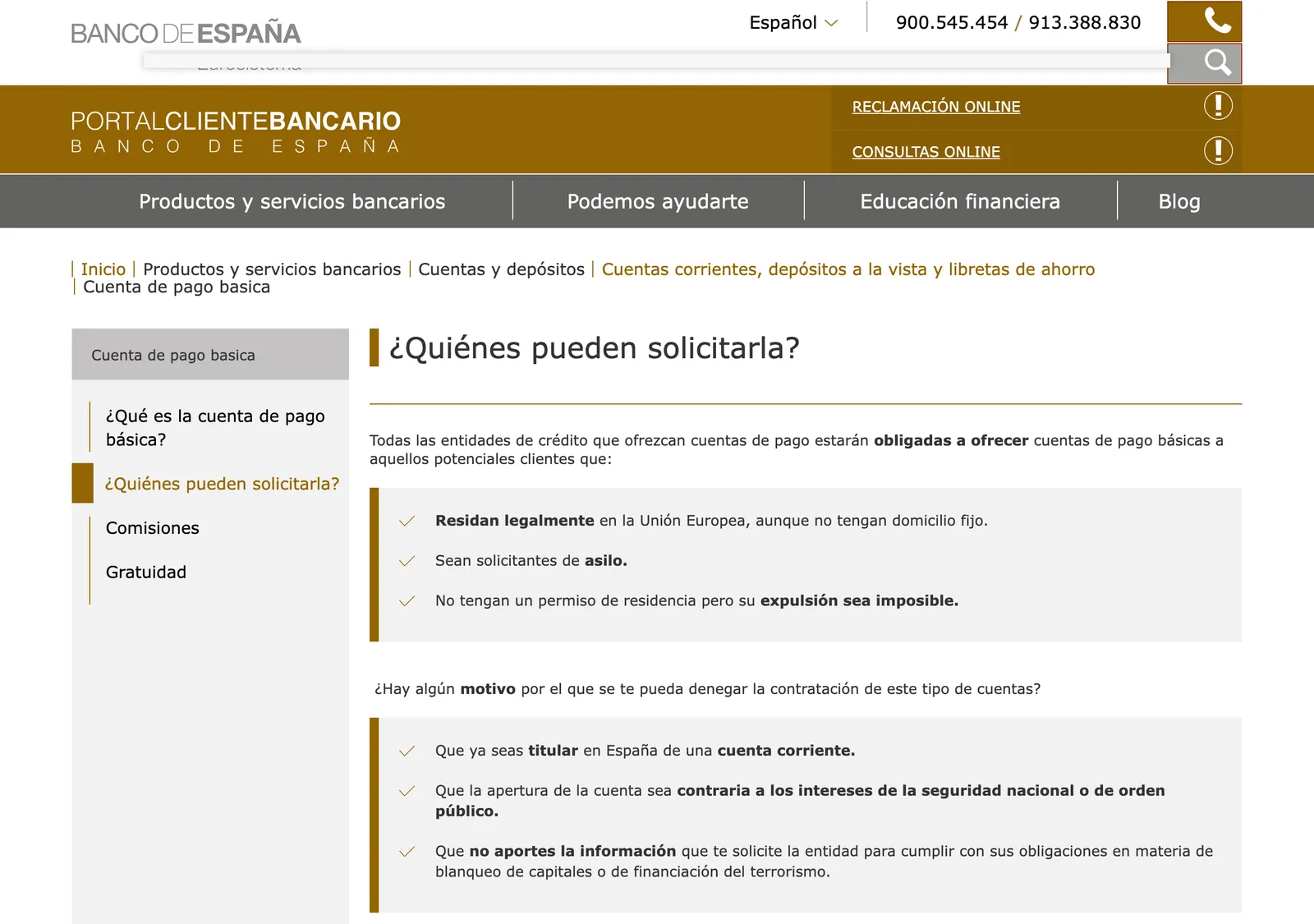
Banks that offer payment accounts must offer a basic payment account to three groups.
Las entidades de crédito que ofrezcan cuentas de pago estarán obligadas a ofrecer cuentas de pago básicas a aquellos potenciales clientes que:
a) Residan legalmente en la Unión Europea, incluidos los clientes que no tengan domicilio fijo;
b) sean solicitantes de asilo;
c) no tengan un permiso de residencia pero su expulsión sea imposible por razones jurídicas o de hecho.
Credit institutions offering payment accounts shall be obliged to offer basic payment accounts to those prospective customers who: a) reside legally in the European Union, including customers who have no fixed address; b) are asylum seekers; c) do not have a residence permit but their expulsion is impossible for legal or factual reasons.
BOE · Real Decreto-ley 19/2017, art. 3
If you live in Valencia on a TIE or an EU registration certificate, you are the person the first group describes. EU/EEA citizens staying over three months apply for the certificate within three months of entering Spain. The certificate shows your NIE and address. A NIE alone does not authorise residence.
If you are not yet a legal resident, the right does not cover you as written. Ask the bank before you travel.
Reasons a bank must refuse
Two situations oblige a bank to refuse the account:
- You do not give the information it requires for its money-laundering and terrorism-financing checks.
- You already hold an account in Spain that provides the basic services, unless that provider has given notice that it is ending the account.
A bank may not make the account depend on buying other services.
Which ID does the bank check?
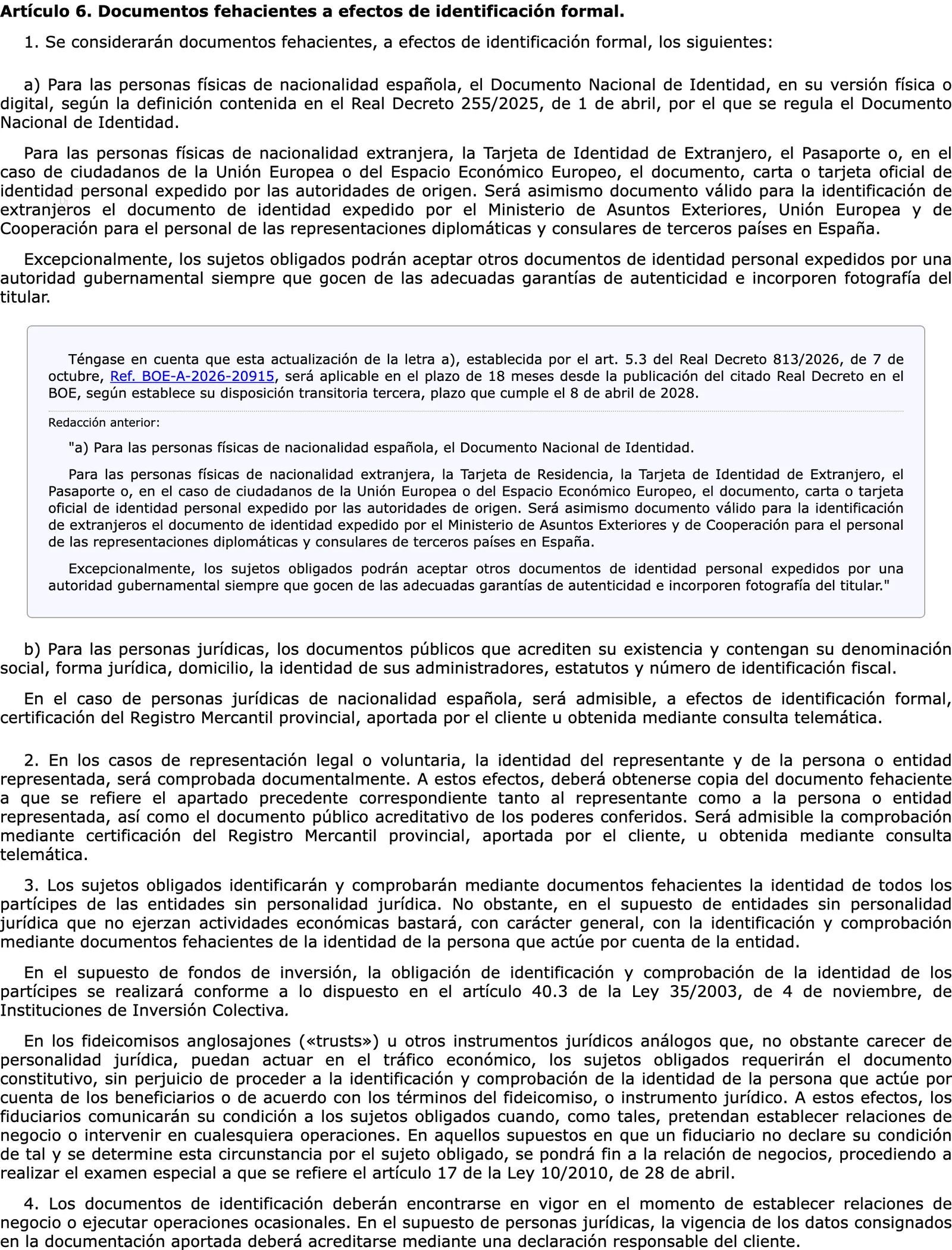
The bank verifies your identity before it establishes the relationship. For individuals of foreign nationality, the valid documents today are the residence card, the TIE, the passport or, for EU/EEA citizens, the official national ID.
Para las personas físicas de nacionalidad extranjera, la Tarjeta de Residencia, la Tarjeta de Identidad de Extranjero, el Pasaporte o, en el caso de ciudadanos de la Unión Europea o del Espacio Económico Europeo, el documento, carta o tarjeta oficial de identidad personal expedido por las autoridades de origen.
For individuals of foreign nationality, the Residence Card, the Foreigner Identity Card, the Passport or, for citizens of the European Union or European Economic Area, the official personal identity document, letter or card issued by the authorities of origin.
BOE · Real Decreto 304/2014, art. 6.1.a)
The document must be in force when you open the account. Check the expiry date before you book the branch visit.
The list changes in 2028
A new wording of the same article drops the old residence card: the list becomes the TIE, the passport or, for EU/EEA citizens, the national ID. It applies within 18 months of the royal decree of 7 October 2026, a period that ends on 8 April 2028.
Papers first, then the branch
The NIE is the number that appears on documents issued to you in Spain. You request it in person from the police, directly or through an Oficina de Extranjería or police station. The fee is €9.84. Read the NIE appointment guide and the TIE guide for the Valencia offices.

At the bank, ask for a basic payment account by that name. The bank identifies the account as such. You then manage it at the branches of the bank where it is opened, and through the bank’s online banking when it has it.
Keep the account active. The bank may end a basic account when no operation has been made for more than 24 consecutive months. It notifies you in writing, free of charge, at least two months before it takes effect. It may also end it when you no longer reside legally in the EU.
Landing before your TIE: what is official?
Before your TIE arrives, the legal right to a basic account does not cover you, so a visitor looks at an ordinary account instead. Foreign nationals may identify themselves with a passport.
An older Banco de España customer post adds points for a non-resident customer. You may be asked to prove that you are not resident, with documents. The bank may ask for proof of where the money comes from, at opening or later. If it cannot get that proof, it may block access to your funds.
Tip: compare fees and conditions on the Banco de España account comparator before you sign. No bank is named or ranked here, and each bank sets its own paper list.
What does a basic account include and cost?
A basic account lets you carry out an unlimited number of operations of the listed services. They are opening, using and closing the account, depositing funds, cash withdrawals at branches or ATMs in the EU, direct debits, debit or prepaid card payments including online, and transfers. The account is denominated in euros.
The bank may charge a single monthly fee of at most 3 euros for those services.
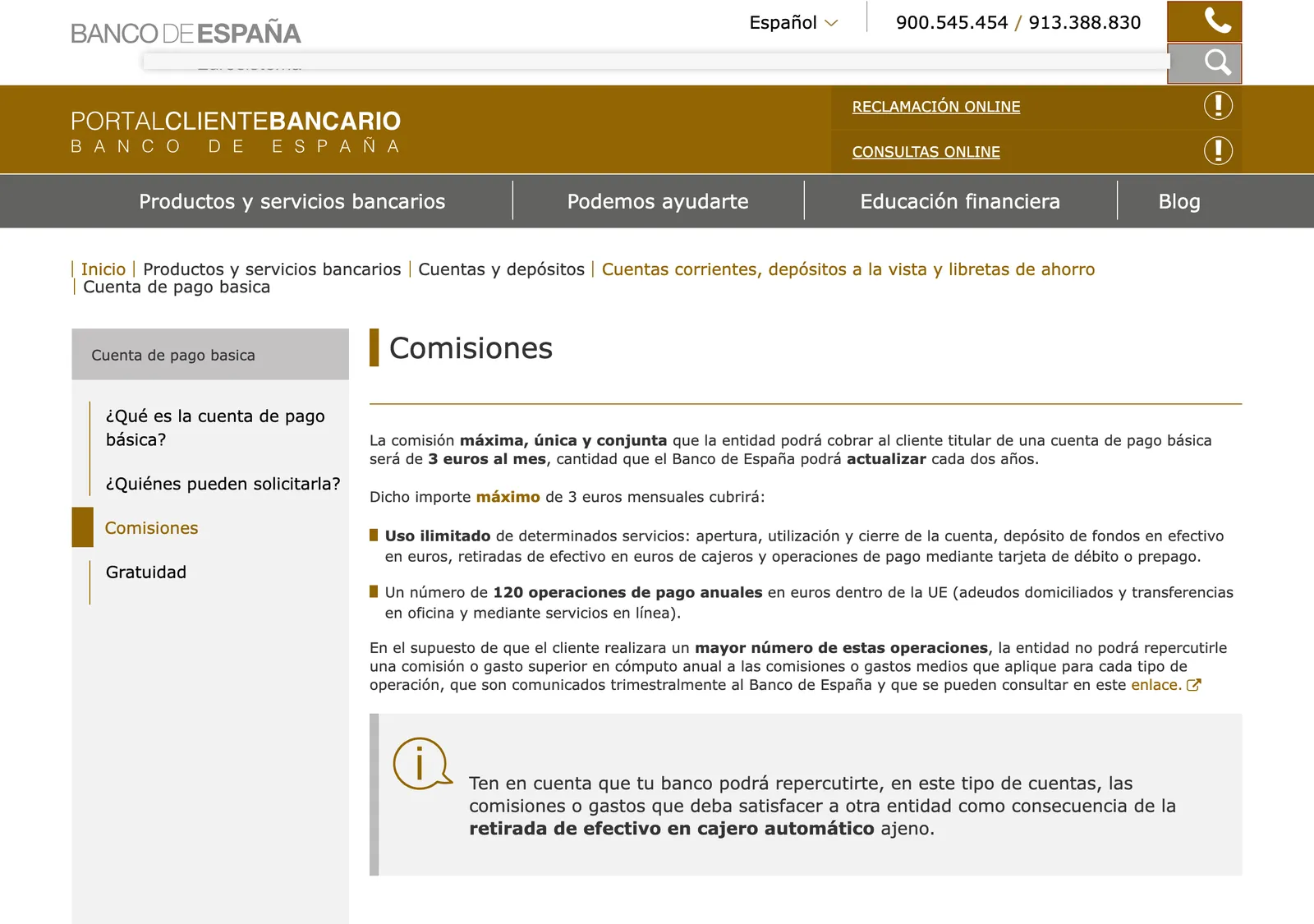
| Item | Limit |
|---|---|
| Monthly fee for the basic services | 3 euros |
| Euro payments inside the EU (direct debits, transfers) per year, covered by that fee | 120 |
Apart from that capped fee, the bank may not charge any fee, cost or expense for the services in the account. Beyond those payments, charges may not exceed the bank’s own average fee for that type of operation. Your bank may pass on the fee another bank charges for a cash withdrawal at its ATM.
The cap is 3 euros a month, and the Banco de España may update it every two years. Check the figure on the portal when you apply.
When is the basic account free?
The account is free for customers in a situation of vulnerability or at risk of financial exclusion. Both conditions apply to all holders.
- Gross annual household income stays under a threshold. For a person outside any family unit it is three times the twelve-payment IPREM in force when you apply.
- No member of the family unit owns property other than the main home, or is beneficial owner of a company.
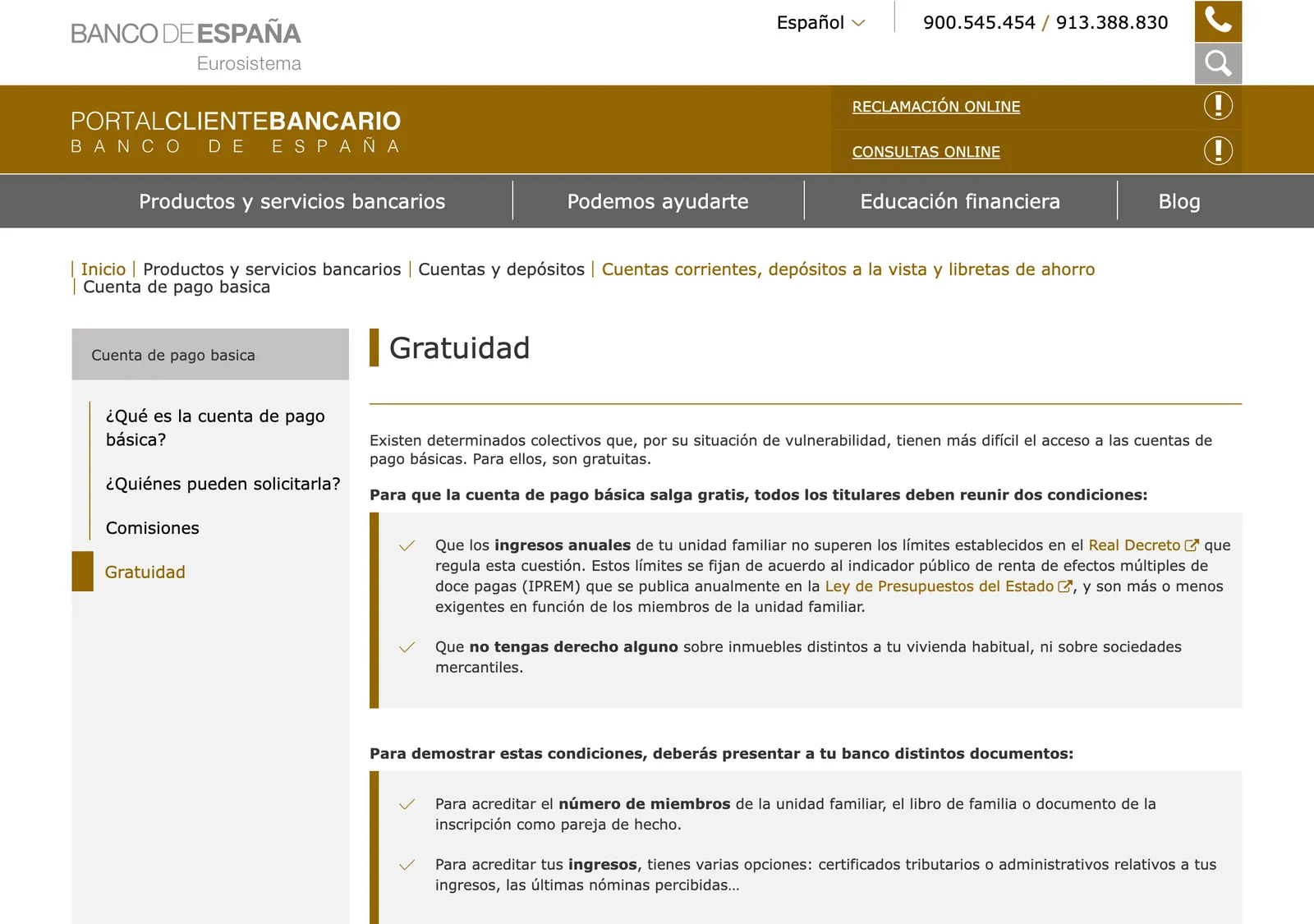
To prove family size, show the family book or the document of registration as a domestic partnership. Without that documentation, a report from the municipal social services on your family unit works. The bank has at most 30 days from receiving your documents to accept or reject the request. If it does not answer in that time, the request is understood as accepted.
Free status lasts two years from recognition and is renewed in two-year periods while the situation continues.
If the bank refuses
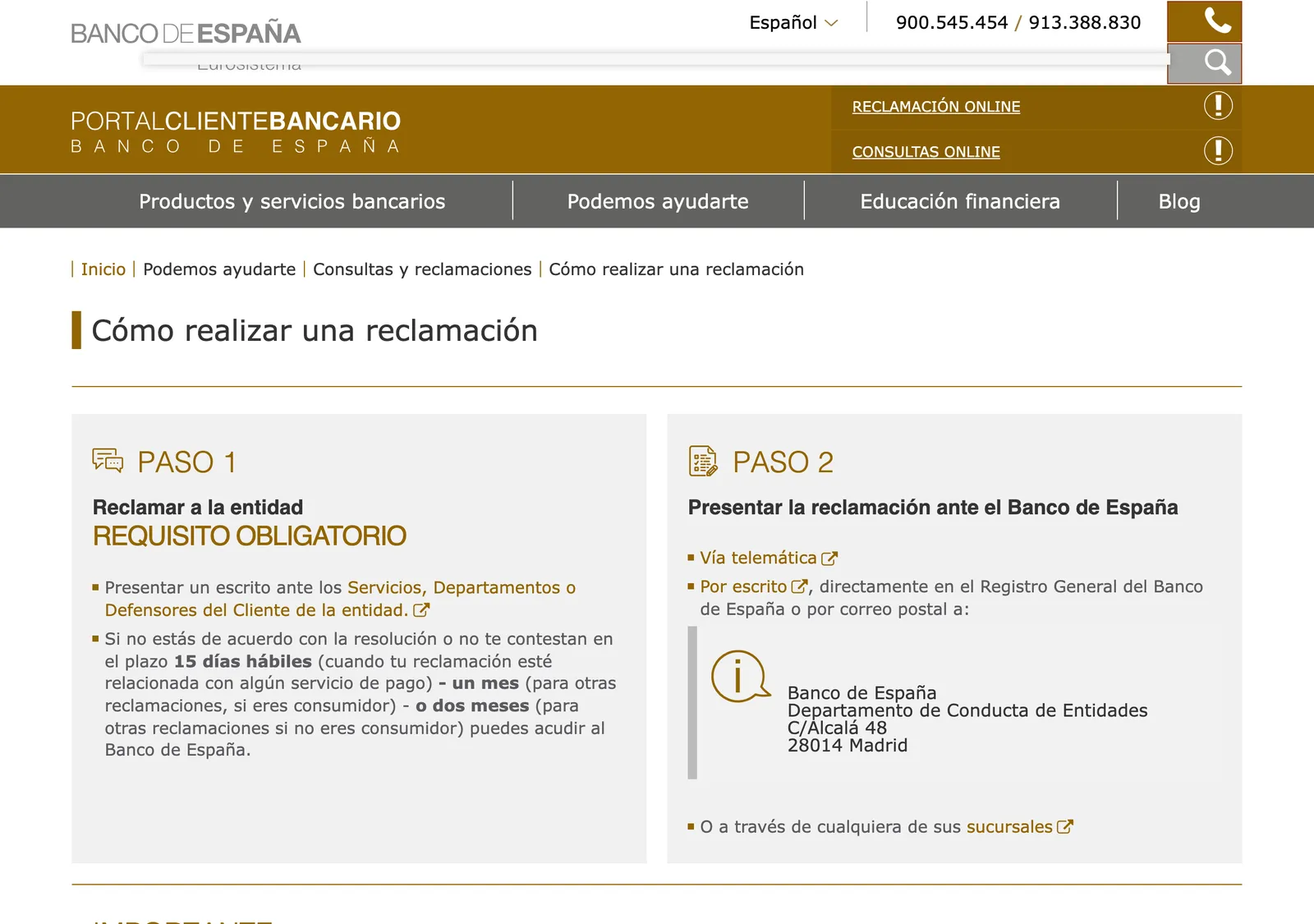
A verbal no is not enough. Expect a written notice, free of charge, with the specific reasons. It comes at the latest within ten working days of the complete application. The notice must also explain how to complain and your right to use the Banco de España complaints procedure.
Step one: complain to the bank
File a written complaint with the bank’s customer service department or customer ombudsman. You need this step before the Banco de España takes a case.
Step two: go to the Banco de España
You may go to the Banco de España if you disagree with the answer or get none within 15 working days for a payment-service complaint. The periods are one month for other consumer complaints and two months for non-consumers. A consumer complaint is inadmissible when a year has passed since it was filed with the bank.
Keeping money safe and reporting accounts abroad
The deposit guarantee fund generally guarantees up to €100,000 per holder and entity.
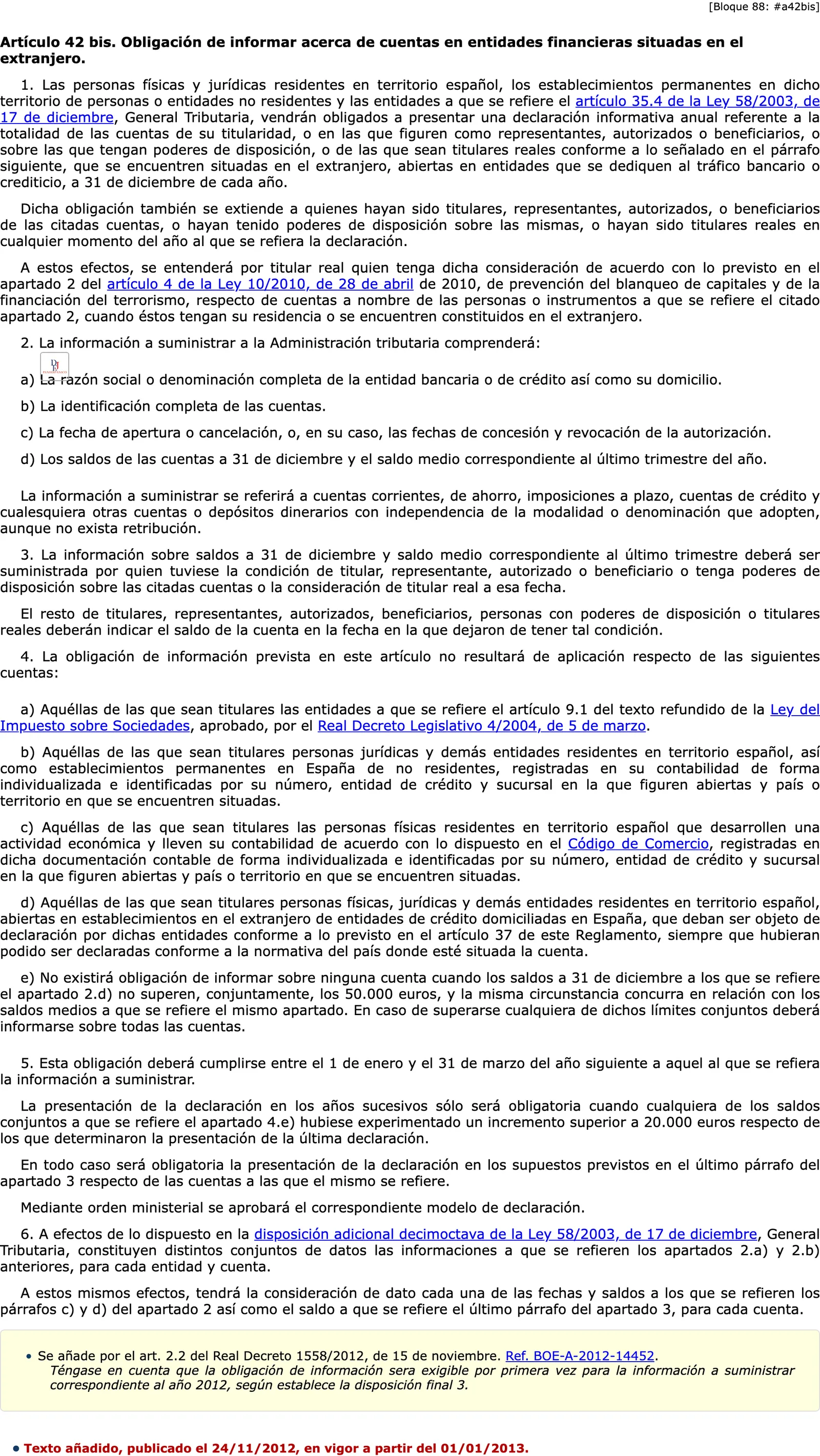
If you become a resident in Spain, read the foreign-assets guide. Residents must report accounts held at banks abroad.
There is no duty if the combined balances on 31 December do not exceed €50,000 and the last-quarter average also stays below it. If either limit is exceeded, all accounts are reported. The same €50,000 limit applies to foreign securities and to foreign real estate. The tax residency guide explains who counts as resident.
With accounts in more than one country, or a balance close to the €50,000 limit, ask a gestor to check.
Photo credits
- A street in central Valencia lined with period buildings: Zarateman, Wikimedia Commons (opens in a new tab) (CC0)
Step by step
- Confirm you are a legal residentThe basic-account right covers people who reside legally in the EU, asylum seekers and people who cannot be expelled.
- Gather valid identity papersBring your passport or TIE, or your national ID if you are an EU/EEA citizen; the document must be valid.
- Apply at a branch of a bank that offers payment accountsAsk for a basic payment account; the bank verifies identity before it opens the account.
- Answer the bank's anti-money-laundering questionsThe bank must refuse if you do not provide the information it requires.
- Check the feeAt most 3 euros a month for the basic services.
- If refused, use the written reasonsYou get a written refusal within ten working days, then complain to the bank and the Banco de España.
Not confirmed: Ordinary accounts for non-EU visitors who are not yet resident: no official text sets this, so ask the bank before you travel. Extra papers such as a NIE or proof of address are set by each bank, so ask for its list. The Banco de España may update the 3 euros cap every two years.
Reach readers planning life in Valencia. Advertise → hello@settlevalencia.com
Common questions
Can I open a bank account in Spain before I am resident?
Not as a legal right. The legal right to a basic account covers people who reside legally in the EU, asylum seekers and people who cannot be expelled. For a visitor who is not yet resident, the right does not cover you as written, so ask the bank first.
Do I need a NIE to open an account?
Not by law. The anti-money-laundering rule accepts the TIE, the passport or, for EU/EEA citizens, the national ID as identity documents. A NIE does not authorise residence. Whether a given bank also asks for a NIE is its own requirement, so confirm before you go.
How much does a basic account cost?
The bank may charge at most 3 euros a month for the basic services, covering up to 120 euro payments a year inside the EU. Beyond those 120, charges may not exceed the bank's own average fee for that type of operation.
Can the bank make me buy insurance or other products?
No. Access to the basic account may not be made conditional on buying other services. If a bank ties the account to extra products, say so in your complaint; a refusal must give its specific reasons in writing.
How long does the bank have to answer me?
Ten working days at most. A refusal must be notified in writing, free of charge, with specific reasons, at the latest within ten working days of the complete application. The notice must also explain how to complain.
What can I do if the bank refuses my application?
Complain in writing to the bank's customer service or ombudsman first. If you disagree with the answer or get none in 15 working days for a payment-service complaint, you may go to the Banco de España.
Is my money safe in a Spanish bank?
Up to a point. The deposit guarantee fund generally guarantees up to €100,000 per holder and entity.
Do I have to report my home-country bank accounts?
Yes, if you are resident in Spain: you must report accounts held abroad. There is no duty if the combined 31 December balances do not exceed €50,000 and the last-quarter average also stays below it. The foreign-assets guide covers the filing.
Read next
General information checked against the sources listed above, not legal advice for your situation. Rules and office practice change; confirm with the immigration office or a licensed adviser before you act. See how guides are checked.
Spotted an error? Report it.