Register as Autónomo in Spain: Steps, Costs, Tax Returns
Register in two steps: file Modelo 036 with the Tax Agency before you start, then request Social Security registration online, up to 60 calendar days before you start. EU/EEA citizens, remote-work permit holders and residents whose permit allows it may work on their own account; non-lucrative holders may not.
Also in: Deutsch
On this page
Want to invoice clients from Valencia? Self-employment in Spain runs on two registrations and a quarterly tax rhythm. Below: the order to do them in, the 2026 contribution table and the permits that allow it.

Can you register as an autónomo?
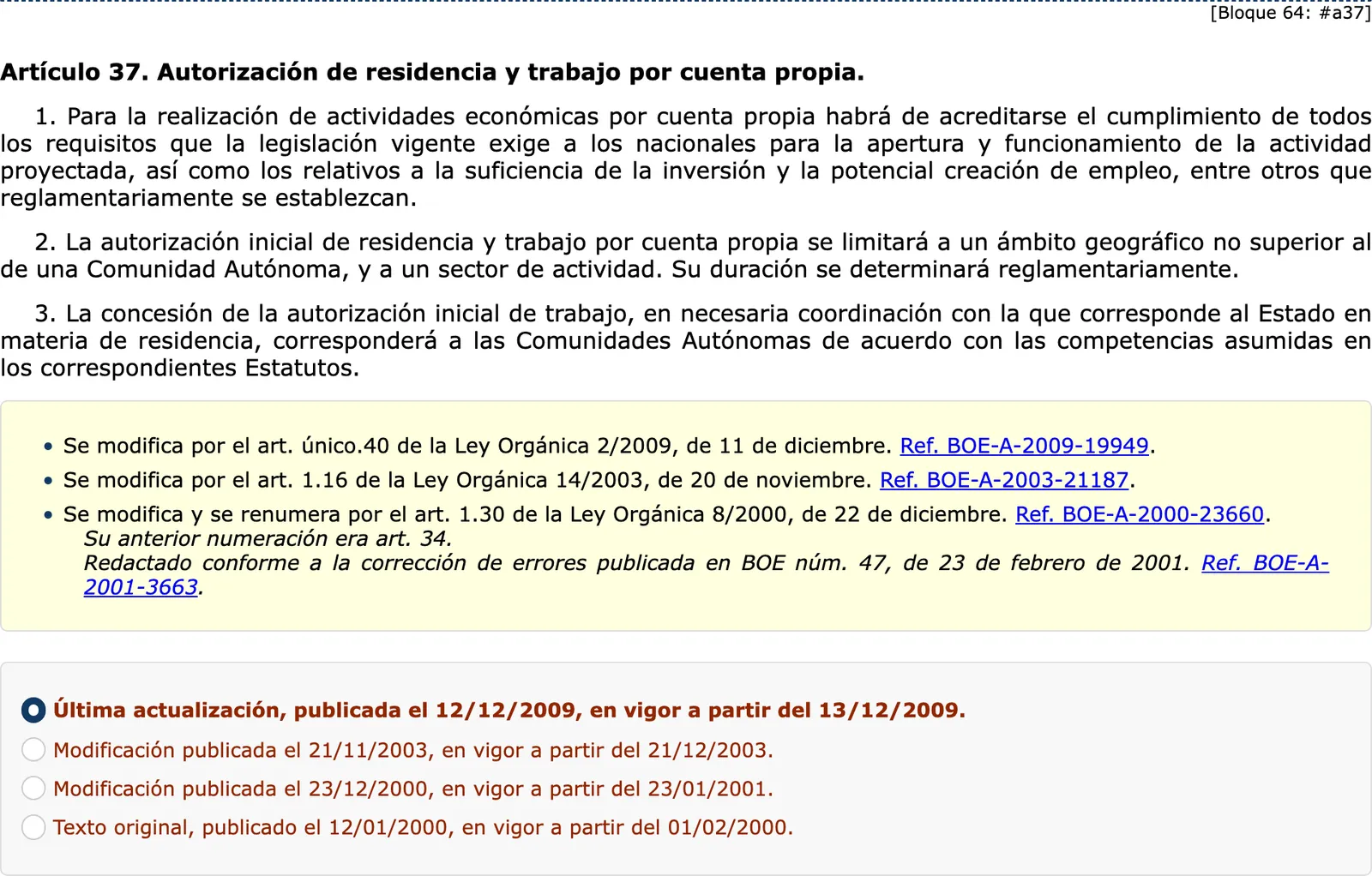
Resident foreigners who meet the requirements of the foreigners law have the right to carry out paid activity on their own account or for others. Which route is yours depends on your status, so find yours below.
If you are an EU or EEA citizen
You have a right to reside over three months if you work in Spain as an employee or self-employed. You apply for the EU registration certificate within three months of entering Spain. It is issued immediately and shows your NIE.
If you hold the remote-work (teleworking) permit
The permit covers remote work for companies outside Spain, as an employee or professional. A self-employed holder may also work for a company in Spain, as long as that work is no more than 20% of the total professional activity. A self-employed applicant proves a commercial contract with the foreign company for at least three months.
Register with Social Security as soon as you work from Spain, because it is required. If a self-employed holder does not register straight after the authorisation, it can be extinguished, and both holder and dependent family are disqualified from residing and working in Spain. The digital nomad visa guide covers the permit itself.
If you hold non-lucrative residence
A holder of non-lucrative residence cannot count remote work done during it, because it does not authorise working. The non-lucrative visa guide explains the limits.
If you are a family member of a teleworking holder
Family members of the holder may work in Spain without restrictions, as employees or self-employed.
If you hold another residence permit
The initial authorisation of residence and self-employment is limited to a geographic area no larger than one autonomous community and to one sector of activity. Working on your own account without having applied for the authorisation, while holding temporary residence, is a minor infringement. Ask the Oficina de Extranjería or a gestor to confirm that your permit allows self-employment before you invoice anyone.
What do you need before you start?
Foreigners with economic, professional or social ties to Spain are given a NIE, but they do not receive it automatically and must request it. You request it in person from the police, directly or through an Oficina de Extranjería or police station. The form is EX15 and the fee is €9.84. A NIE alone does not authorise residence.
Remote-work permit holders can register with Social Security with a passport during the first six months, even without a NIE. The NIE appointment guide covers booking in Valencia, so read it before you reach for the form.
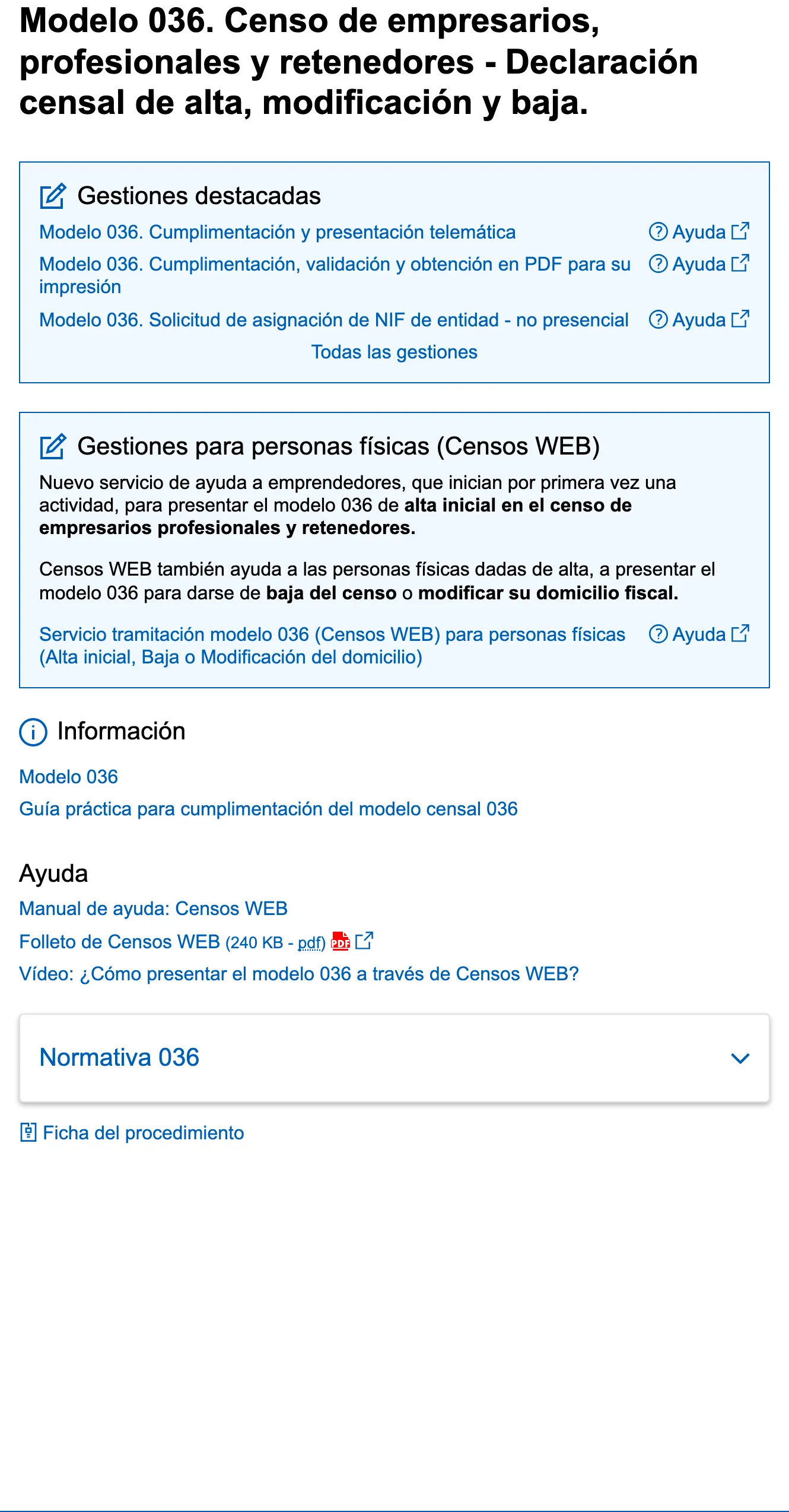
Self-employed workers must do their Social Security procedures online through the electronic office, or through an authorised person on the RED system. The Tax Agency offers an assistance service for people starting an activity for the first time to file the first Modelo 036.
Step one: the tax census with Modelo 036
File Modelo 036 before you start activities or operations. It is the census declaration of registration, modification and deregistration for business people and professionals. The simplified Modelo 037 no longer exists.
Individuals, whether or not resident in Spain, are exempt from the IAE business tax. The census filing still applies to you.
Step two: Social Security registration
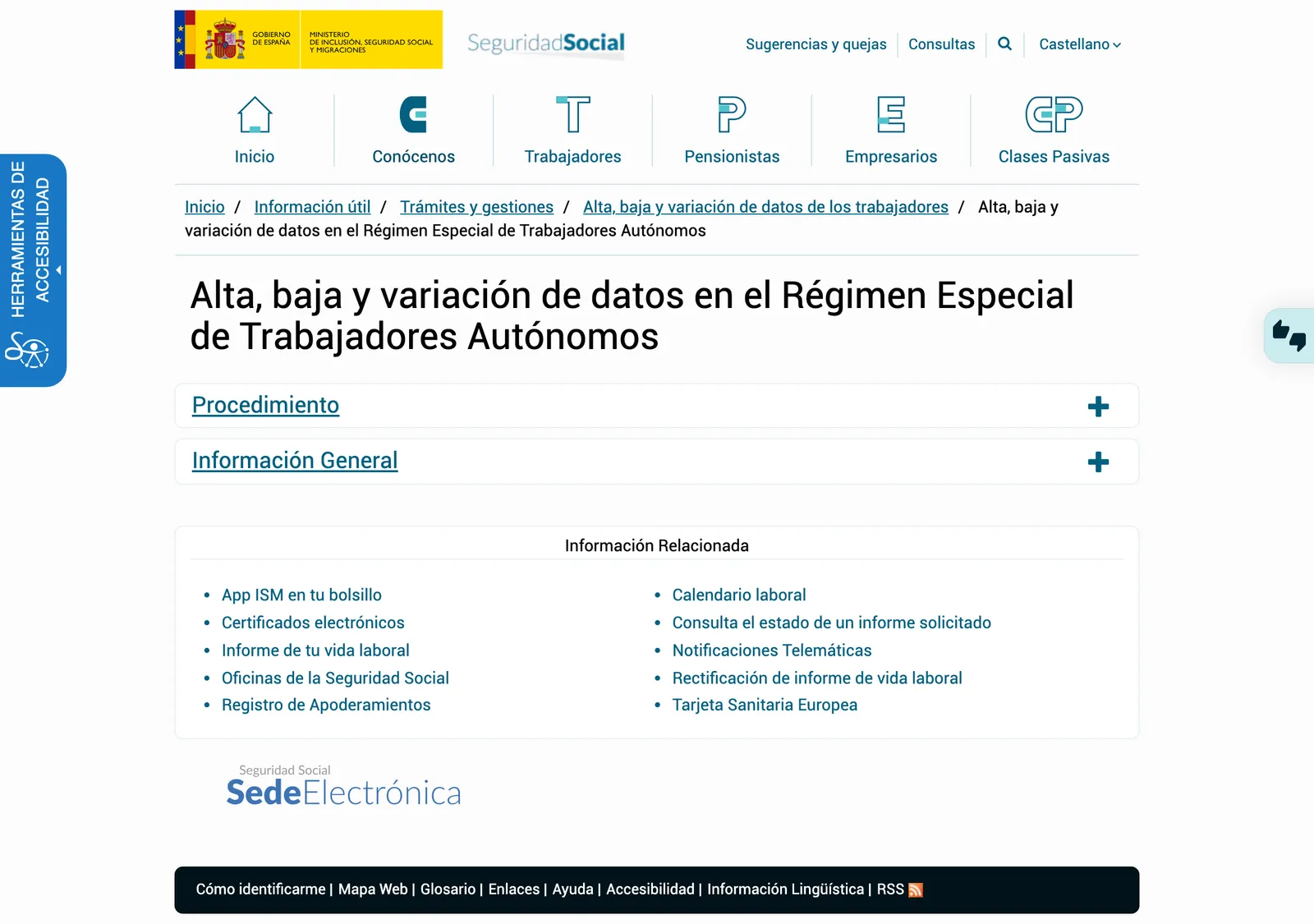
With the census done, request the registration before the activity starts, up to 60 calendar days beforehand. The self-employed worker is responsible for requesting it, and the procedure is online.
When the registration takes effect
Up to three registrations in a calendar year take effect from the day all conditions are met, if requested within the regulatory period. Later ones take effect from the first day of the month.
Deregistration and changes
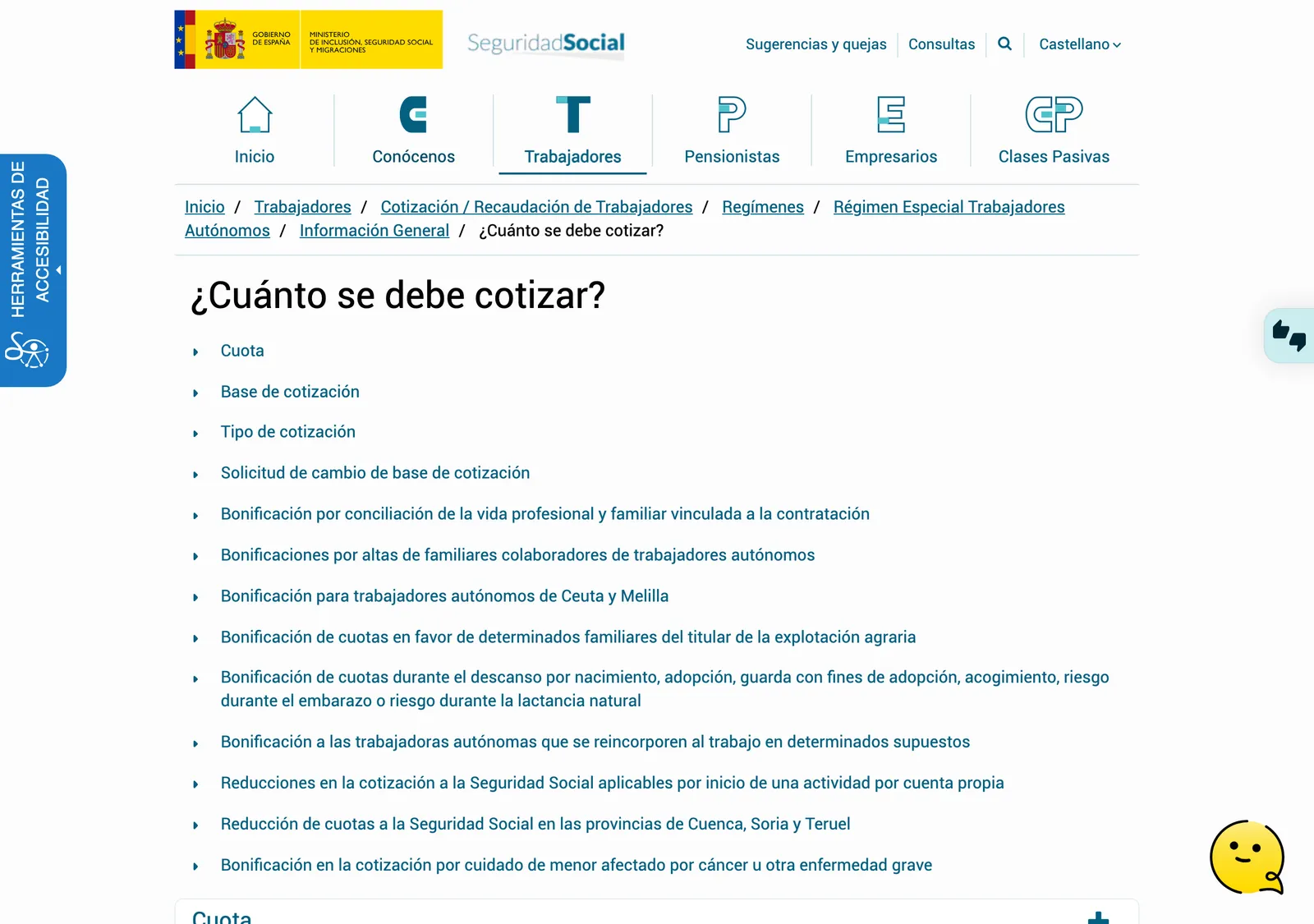
Request your deregistration and any change of data within 6 calendar days. Someone who used the reduced fee must wait three years after deregistering before claiming it again.
What do you pay each month?
For 2026 the maximum monthly contribution base is €5,101.20, whatever your net income. Your base depends on your expected net monthly income. The reduced table covers income up to €1,166.70 and the general table starts at that figure.
Reduced table
| Band | Net income per month | Minimum base | Maximum base |
|---|---|---|---|
| 1 | Up to 670 euros | €653.59 | €718.94 |
| 2 | Over 670, up to 900 euros | €718.95 | €900.00 |
| 3 | Over 900, below €1,166.70 | €849.67 | €1,166.70 |
General table
| Band | Net income per month | Minimum base | Maximum base |
|---|---|---|---|
| 1 | €1,166.70 to €1,300 | €950.98 | €1,300.00 |
| 2 | Over €1,300, up to €1,500 | €960.78 | €1,500.00 |
| 3 | Over €1,500, up to €1,700 | €960.78 | €1,700.00 |
| 4 | Over €1,700, up to €1,850 | €1,143.79 | €1,850.00 |
| 5 | Over €1,850, up to €2,030 | €1,209.15 | €2,030.00 |
| 6 | Over €2,030, up to €2,330 | €1,274.51 | €2,330.00 |
| 7 | Over €2,330, up to €2,760 | €1,356.21 | €2,760.00 |
| 8 | Over €2,760, up to €3,190 | €1,437.91 | €3,190.00 |
| 9 | Over €3,190, up to €3,620 | €1,519.61 | €3,620.00 |
| 10 | Over €3,620, up to €4,050 | €1,601.31 | €4,050.00 |
| 11 | Over €4,050, up to €6,000 | €1,732.03 | €5,101.20 |
| 12 | Over €6,000 | €1,928.10 | €5,101.20 |
Rates for 2026
| Contribution | Rate |
|---|---|
| Common contingencies | 28.30% |
| Professional contingencies | 1.30% |
| Intergenerational equity mechanism | 0.90% |
| Cessation of activity | 0.90% |
| Vocational training | 0.10% |
The intergenerational equity rate applies to the common-contingencies base. From 1 January 2026 the state budget was extended automatically, which is why a ministerial order sets the 2026 contribution rules.
The reduced first-year fee
The reduction applies if you register for the first time, or were not registered during the previous two years. It runs for the twelve full calendar months from registration, and you are exempt from cessation-of-activity and training contributions in that period. A second year of reduced fee is possible if your annual net income is below the annual minimum wage.
You request the reduction when you register, and before the second period starts. It does not apply to relatives, up to the second degree, of self-employed workers who join the regime. While you are on it, benefits are calculated on the minimum base of the lowest band of the general table.
The fee was 80 euros a month for 2023 to 2025. From 2026 the amount is set by each year’s State Budget Law. Tip: read the amount on the Social Security page before you register.
Quarterly and yearly tax returns
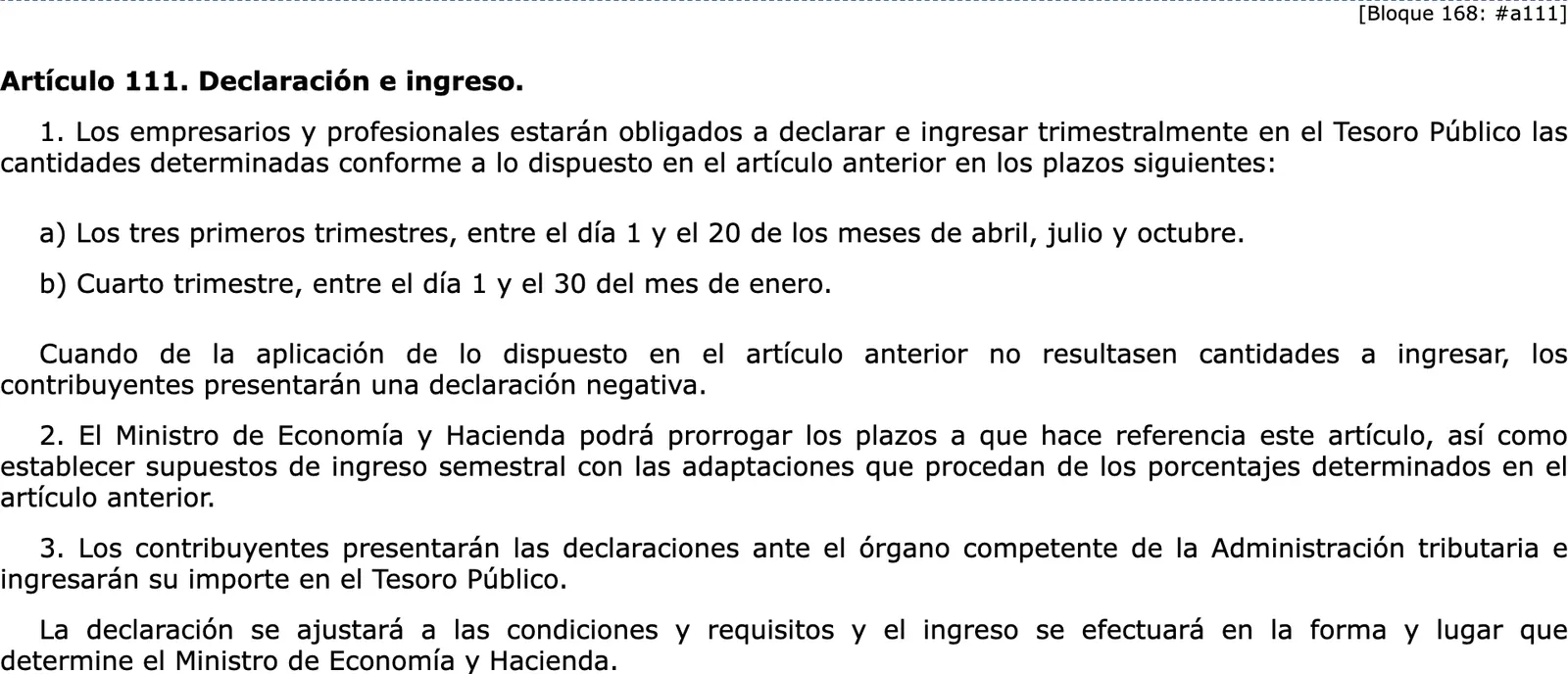
Business people and professionals file and pay an income-tax instalment each quarter. The first three quarters fall between the 1st and the 20th of April, July and October. The fourth quarter falls between 1 and 30 January. If nothing is due, you file a negative declaration.
Under direct estimation the instalment is 20 per cent of net income from 1 January to the end of the quarter. Professionals do not make the instalment if, in the previous calendar year, at least 70 per cent of the activity’s income was subject to withholding.
VAT
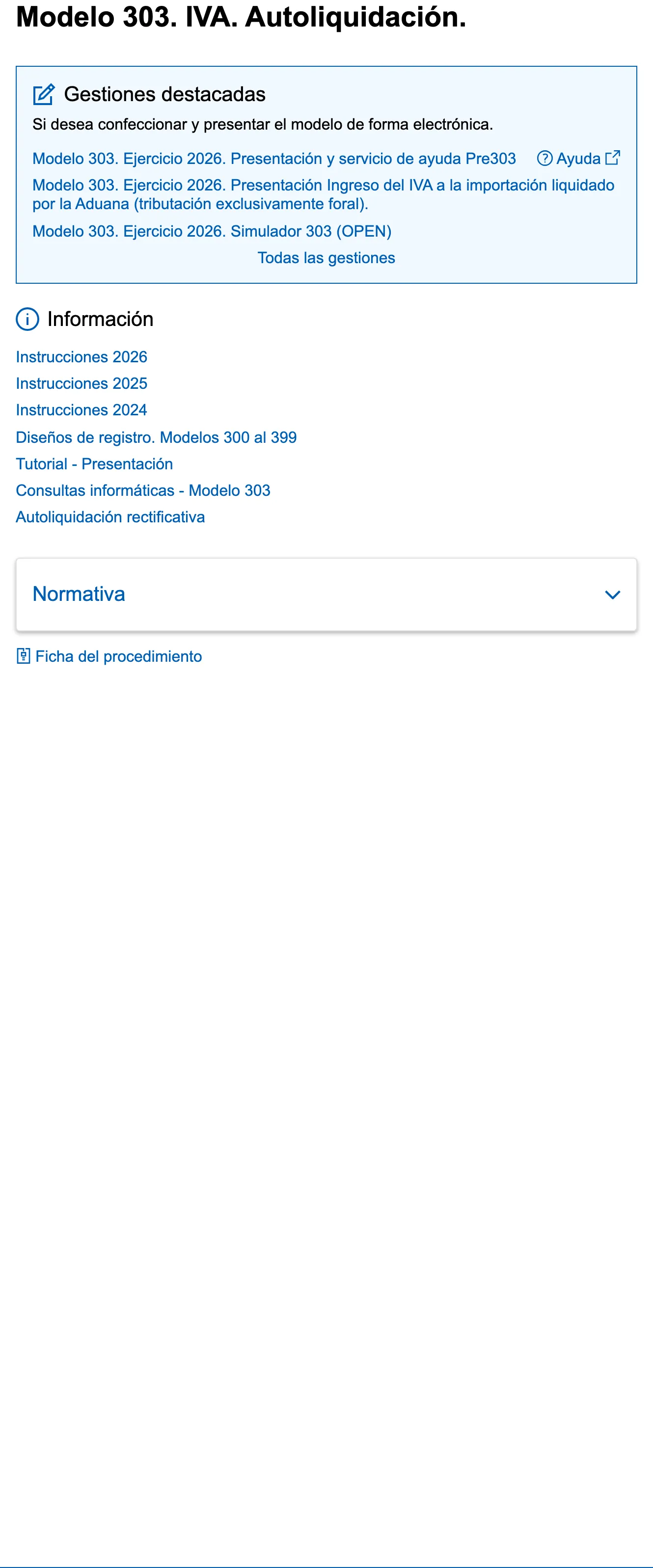
The VAT settlement period is the calendar quarter. You file the quarterly VAT return during the first twenty calendar days of the month after the quarter. The return for the last period of the year is due during the first thirty calendar days of January.
The annual income-tax return
Anyone who was registered as self-employed at any time in the tax year must file an IRPF return. For how the Valencian scale works, see the pensioner tax guide.
If you invoice Spanish clients and are unsure which rate and deductions apply, ask a gestor to prepare the quarterly returns.
Photo credits
- The square in front of Valencia town hall: Julián Monrabal, Wikimedia Commons (opens in a new tab) (CC0)
Step by step
- Check that your permit allows self-employmentEU/EEA citizens, resident foreigners with the right permit and remote-work holders may work on their own account.
- Get your NIEForeigners with economic or professional ties to Spain request the NIE from the police.
- File the census formFile the census registration before you start activities; Modelo 037 no longer exists.
- Request Social Security registrationDo it online, up to 60 calendar days before you start, and ask for the reduced fee at the same time.
- Pick your contribution baseChoose the base from the 2026 table that matches your expected net monthly income.
- File quarterly returnsIncome-tax instalments and VAT returns are quarterly.
Not confirmed: Reduced first-year fee in 2026: the law set 80 euros a month for 2023 to 2025 and leaves later years to each budget law, and the 2026 budget was extended. Social Security words the 80 euros for 2023 to 2025 only: confirm the 2026 amount. Your permit: ask the Oficina de Extranjería or a gestor whether it allows self-employment.
Reach readers planning life in Valencia. Advertise → hello@settlevalencia.com
Common questions
Do I still use the simplified census form to register?
No. Orden HAC/1526/2024 abolished the simplified Modelo 037, so individuals use Modelo 036 for census registration. Modelo 036 is the census declaration of registration, modification and deregistration for business people, professionals and withholding agents.
Can I register as autónomo as a foreigner?
Yes, if your status allows it. EU/EEA citizens have a right to reside over three months if they work in Spain as an employee or self-employed. Resident foreigners who meet the legal requirements may work on their own account. Your permit decides the rest, so check it before you register.
How much will I pay each month in 2026?
It depends on your income. The base depends on expected net monthly income, from a reduced table and a general table. The 2026 rates are 28.30% for common contingencies, 1.30% for professional contingencies, 0.90% for the intergenerational equity mechanism, 0.90% for cessation of activity and 0.10% for training.
Is there a reduced fee for my first year?
Yes. A reduced fee applies for the twelve full calendar months from registration, and you request it when you register. The 2026 amount is set by the budget law, and no new 2026 budget law exists. Check the Social Security page for the current figure.
When do I have to register?
Before you start. File Modelo 036 before you start activities. Request the Social Security registration before the activity starts, up to 60 calendar days beforehand. Deregistration and changes of data are due within 6 calendar days.
How often do I file tax returns?
Quarterly. The income-tax instalment is due 1 to 20 April, July and October, and 1 to 30 January. The VAT return is quarterly and due in the first twenty calendar days after the quarter. Filing happens even when nothing is due, as a negative declaration.
Do I pay the IAE business tax?
No. Individuals, whether or not resident in Spain, are exempt from the IAE business tax. You still file the census registration with Modelo 036.
Read next
General information checked against the sources listed above, not legal advice for your situation. Rules and office practice change; confirm with the immigration office or a licensed adviser before you act. See how guides are checked.
Spotted an error? Report it.